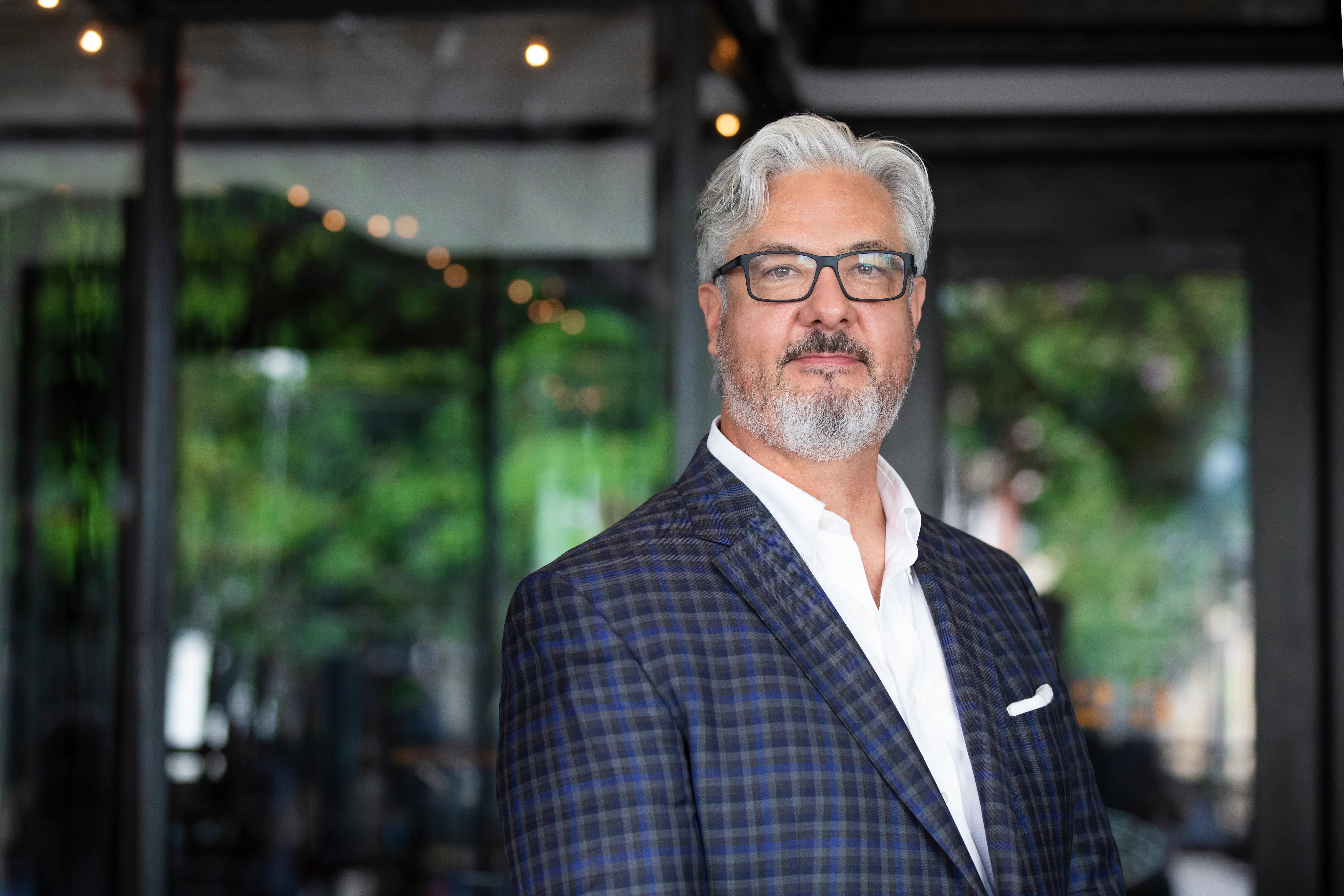
In Conversation with Beth Mitchell
Much of the work Beth Mitchell has designed over the past two decades is within a few miles of her Raleigh home. She passes these places during an ordinary day, a proximity that has shaped what she values in architecture.
"Doing work that I see in my everyday life, where I can connect to the people using the space, or be one of the people using the space, is really important to me,” Mitchell says. “It’s a version of ‘Be the change you want to see,’ but more like ‘Draw the space you want to use.’ It’s especially rewarding to work on a civic or public project, because it feels like I’m serving the people who are serving all of us.”
Mitchell recently joined Hanbury as Associate Principal and Market Leader for Community and Mixed-Use work, bringing a long-standing connection to Raleigh and particular expertise in workplace-anchored projects as the firm continues to grow its presence in the region.
“I’ve been lucky in that most of my past projects are within about 10 miles of where I live,” she says. “For the Raleigh studio, building more hyper-local projects and feeling like our work is more connected to the city is important to a lot of people. It’s exciting that I could be part of helping to bring in more projects from our own community.”
“The best spaces and the best experiences should be for all of us.”
Mitchell describes herself as civic-minded, with a particular interest in how architecture shapes our shared spaces.
“I always feel like the best spaces and the best experiences should be for all of us,” she says. “The public realm is open to everyone, and so those spaces should be excellent from a design standpoint, because that says something about how we value each other as people.
“But I think mixed-use spaces are very similar. Your price of admission might be a cup of coffee or a gym membership, but these are the places where we all gather, and they should point to our community’s values and what we’re endeavoring to be. I always try to run down a mental list of every person that might be in a communal space, from a landscaping crew to a businessperson to a family with little kids. How we make these spaces says something about what we all have in common.”
Her background in workplace projects has also made her attentive to the difference between planning for people and planning around a formula.
“There are so many workplace trends and people who track them,” she says. “Those are helpful things to be aware of, but you have to be careful not to let trends and all of the math that you do for big spaces take over. It’s easier to make big broad-brush choices, but we can lose sight of the people and what they actually need.”
“We can lose sight of the people and what they actually need.”
Mitchell prefers to understand how someone actually works before deciding what their environment should provide.
“I really love opportunities when the leadership invites you to come in and tailor a space to something that’s unique or specific about their group,” she says. “It’s much more interesting to get to know people and how they work or how they unwind, and then create something that really delights them or helps them do their work.
“There is always a budget to manage, and things like equity of space and some level of standardization to think about. You can’t go overboard customizing things. But it is much more satisfying to build something that feels personal to someone instead of just doing a copy-paste of the last workspace that you worked on. That’s what I look forward to.
“I think for that reason, I’ve really found a lot of value and enjoyment in working through the programming and strategy phases with someone before jumping into design. And I’ve found a lot of people at Hanbury who are interested in the same approach, in all of the different project types and scales. Everyone is so curious and willing to adapt.”
That attention to people also shapes her relationships with clients. Mitchell has learned that familiarity with building and development does not necessarily remove uncertainty around the design process.
“As designers, I think we can forget that the rest of the world doesn’t see what we’ve seen or know what we’re thinking about,” she says. “We see a good design solution and it makes sense to us, but we can’t just drop it in someone’s lap and not walk them through it.
“Every client, no matter how many buildings they have built, carries worries about whether they are doing the right thing, whether a project is going to be successful, or whether people will respond well to it. We’re here to walk people through that process, no matter who they are.”
“They want it to grow better, not just bigger.”
Having spent most of her life and career in North Carolina, she has watched the city grow around her. She sees opportunity in the next generation of downtown development and in the places taking shape around the region’s parks, lakes, and green spaces.
“We have such a great community in Raleigh and really this entire area,” she says. “I think most people like living here and they want it to grow better, not just bigger.
“I get invited to birthday parties at Downtown Cary Park or to walk dogs at NCMA, and you can feel how much people here appreciate good design and great public spaces. That’s a shared value with public clients and private owners and developers. They all recognize that when each of us thrives, we all thrive.”