Project
Lightyear
By embracing a net zero mission and pushing the boundaries of sustainable design, Project Lightyear sets a new benchmark for industrial construction and embodies the intrinsic link between human health and the built environment.
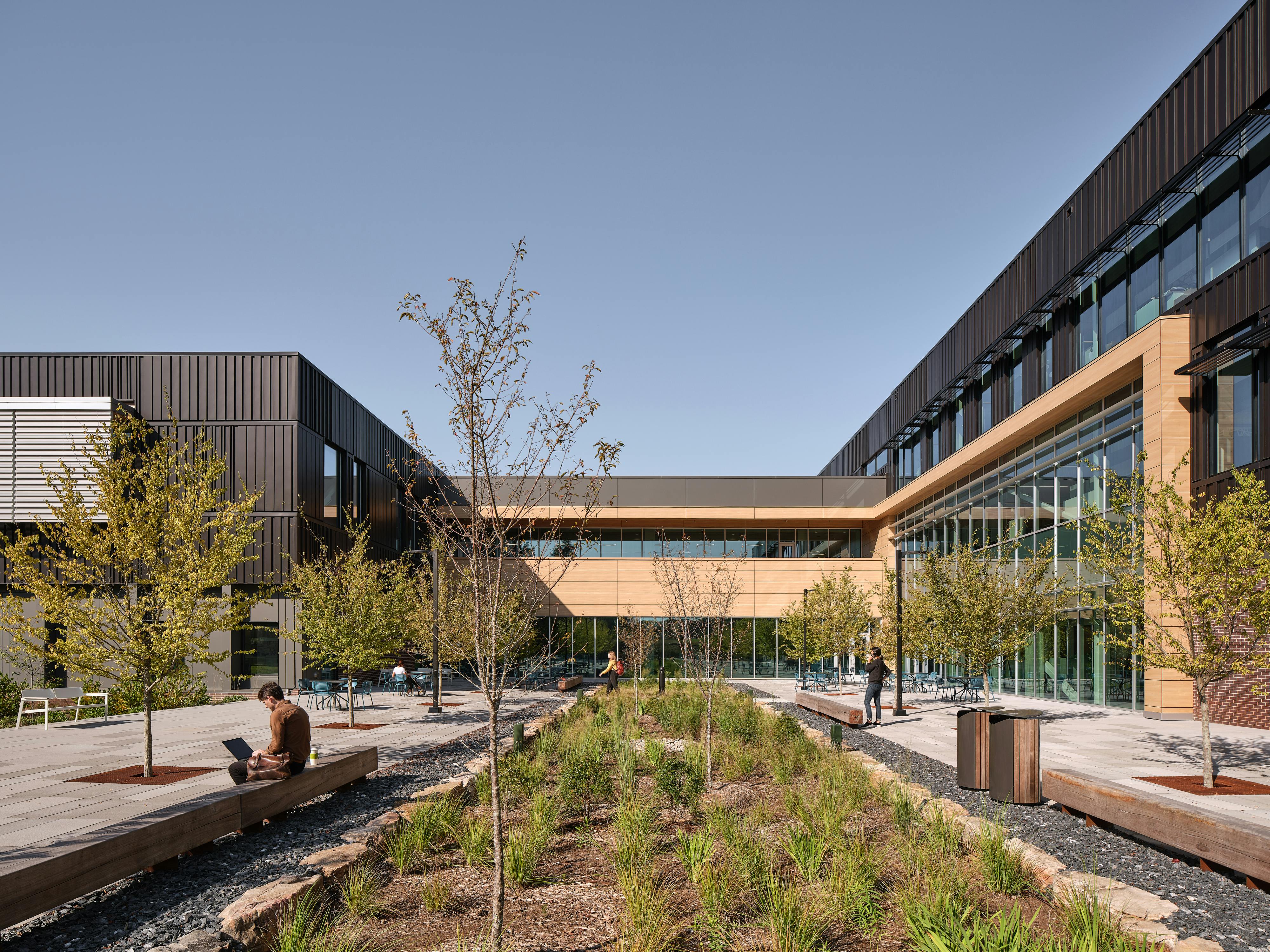
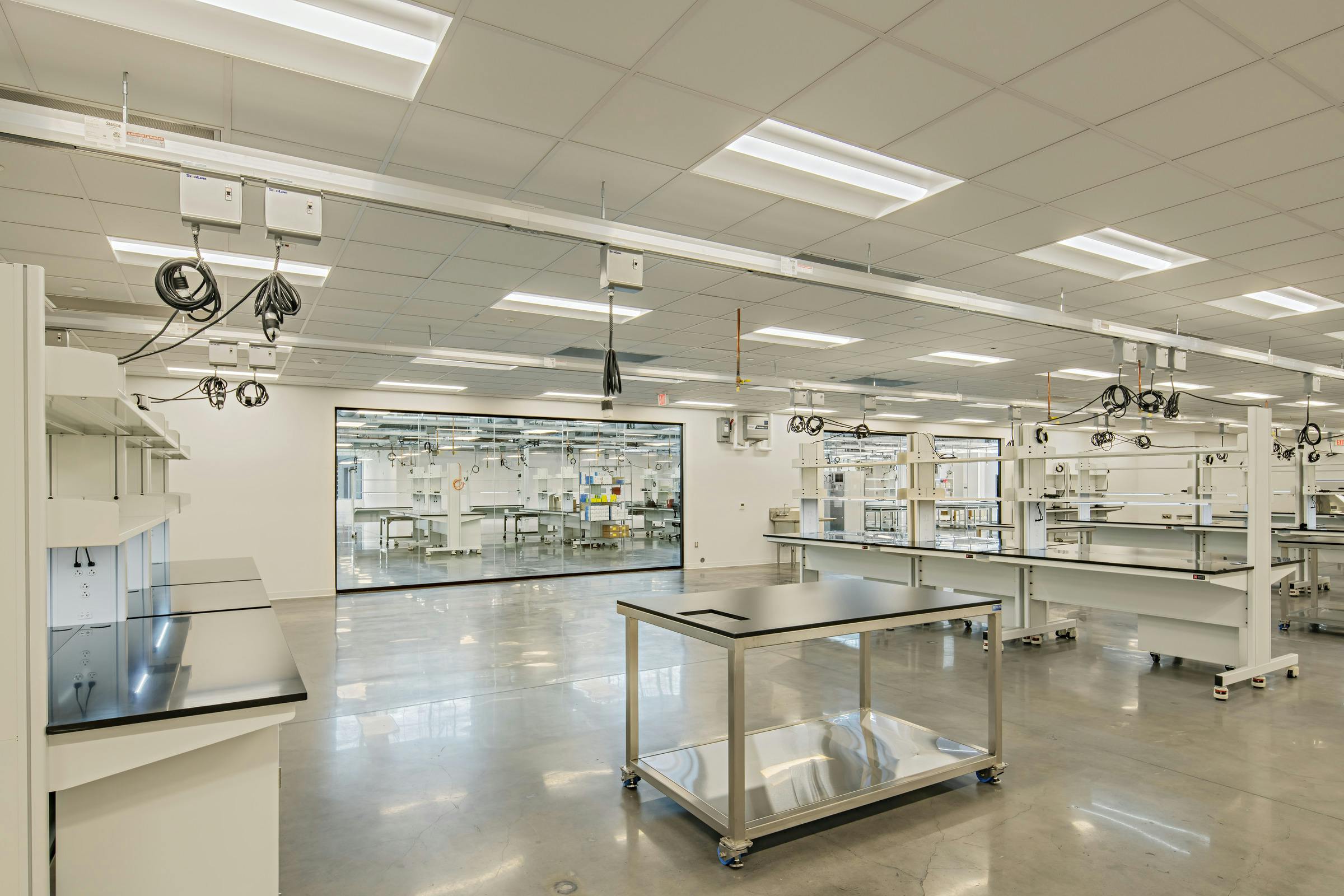
Situated in North Carolina’s Research Triangle Park, Project Lightyear establishes a new model for resilient, high-performance biomanufacturing. As the fifth net-zero facility in United Therapeutics’ portfolio and the second on this campus, it expands the company’s life-saving mission, meeting urgent needs for advanced pharmaceutical logistics and demonstrating the transformative power of a holistic approach to operations and energy management.


Repurposing an existing soccer field allowed development within an already cleared area, minimizing ecological impact. The preservation and adaptive reuse of the Frank Harmon Fieldhouse, a structure of local architectural significance, anchors the project in its context. It provides a connective threshold between community and industry while leveraging existing assets to generate new function and meaning.


Operational autonomy is achieved through a fully integrated, zero-carbon microgrid. 1,186 rooftop photovoltaic panels, Tesla Megapack battery storage, and a Schneider control system allow the building to operate independently from the grid, including during extended outages. This eliminates on-site fossil fuels and supports regional carbon neutrality goals.


The design deploys automated strategies, including smart lighting, occupancy sensors, demand-controlled ventilation, and regenerative-charging electric lift trucks, to minimize operational waste. As a result, Project Lightyear achieves both Site Carbon Zero and Site Net Zero and establishes a replicable model for future sustainable industrial projects.


"At United Therapeutics, we adopted the mindset that we could develop life-saving medicines for patients without harming the planet."
– Dr. Martine Rothblatt, CEO, United Therapeutics

- Sector: Science
- Scope: Architecture, Lab Planning
- Raleigh, North Carolina
- 2023
- 51,000 SF
- ISPE Facility of the Year (FOYA) Category Winner – Honorable Mention, 2024
- Sustainable Laboratory Award for Excellence in Resilience and Renewable Energy
- USGBC Carolinas Local Leadership Award, 2024