How Story Becomes Space
by Patrick Gegen, Design Principal
When people think about experiential design, they often picture graphics, signage, finishes, or placemaking elements. And while those components certainly play a role, they are only part of a much larger story. The most memorable environments begin with a deeper understanding of who a place serves, what it represents, and how people move through it.
That work starts long before materials are selected or details are refined. It influences the interior architecture, circulation, operations, and emotion simultaneously. It shapes how an organization expresses its culture and values, honors its history, and communicates its aspirations. At its core, experiential design is about translating ideas into experiences and experiences into places.

Some of the most important work on a project happens during the initial kickoff. Discovery workshops, visioning sessions, and stakeholder conversations provide an opportunity to gather information, but they also help uncover the stories and aspirations that define an organization’s identity.
Often, clients arrive with a sense of what they need but are still exploring what they want to communicate. Through conversation and careful listening, those ideas begin to take shape. The most valuable insights are not always found in direct answers. They emerge in the stories people tell, the experiences they remember, and the values they return to again and again.
That process requires designers to be listeners first. It requires curiosity, empathy, and the ability to recognize patterns that connect people, place, and purpose. The goal is not simply to create a design solution. It is to help uncover a point of view and build a shared understanding of how it can be expressed through space.
Experiential design begins with people. We ask questions like: What should someone feel when they arrive? How will they move through the space? What should capture their attention, invite curiosity, or create a sense of comfort? How should the space sound, feel, and unfold as they experience it? The answers shape everything from circulation patterns and operational flow to material selections, lighting strategies, textures, acoustics, and the moments of connection that people remember long after they leave.

At UNC Charlotte's Student Center Space for Wellness, the design team explored themes of ritual, mindfulness, and retreat. Inspired by traditions of cleansing and reflection, the space was shaped by studying the ways people physically interact with water, from standing at a basin to sitting on a bench during moments of pause.
Material selections, basin detailing, and the careful management of water itself work together to create a calming sensory experience, while the sound of flowing water becomes part of the atmosphere. The experience unfolds gradually, encouraging students to slow down, disconnect from daily pressures, and reconnect with themselves.
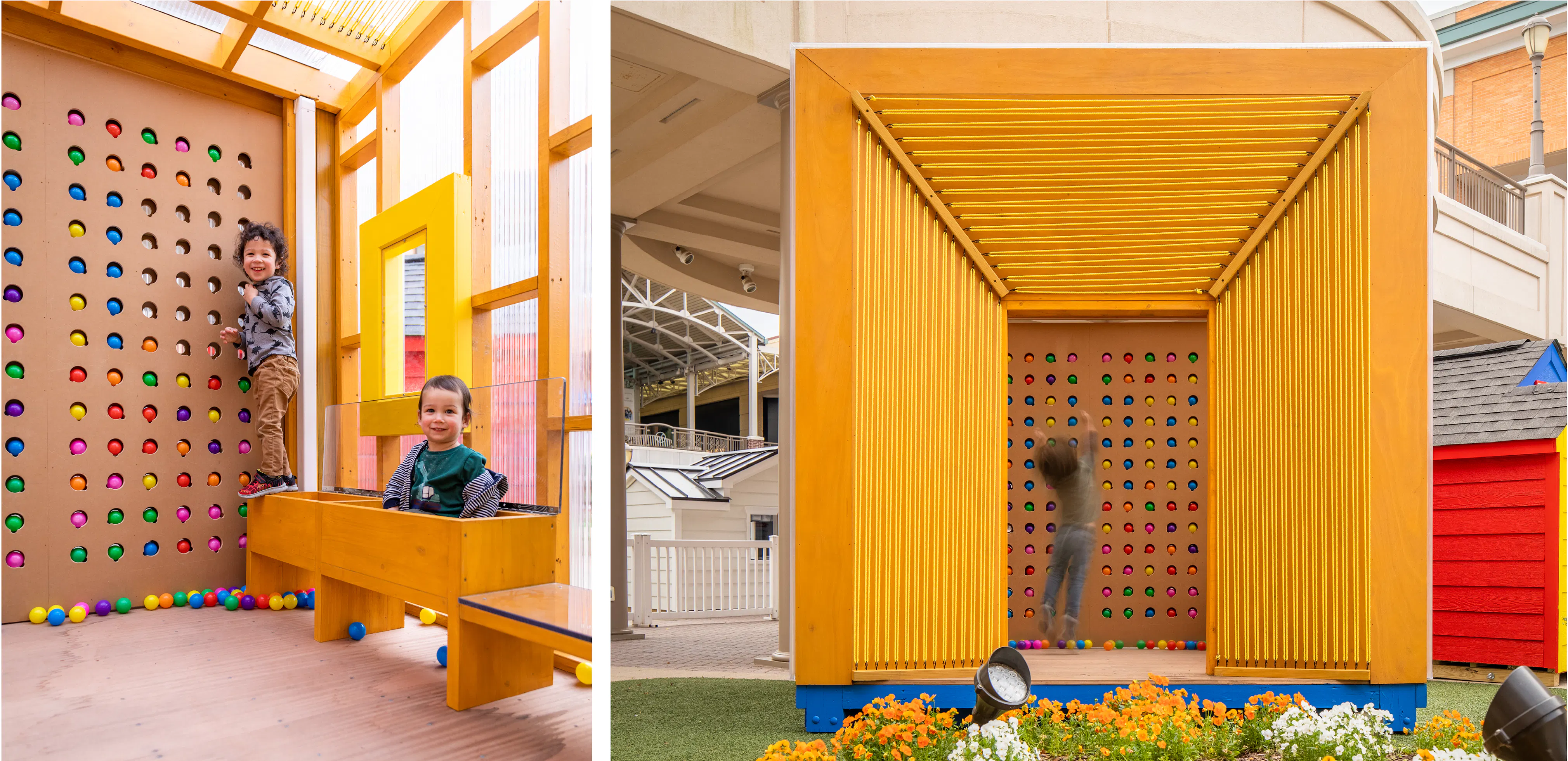
At CASA Playhouse, play became the organizing idea. The environment was designed through the eyes of a child, where exploration, imagination, and discovery are part of every interaction. The design draws inspiration from the way found objects often become tools for play, and how a cardboard box or piece of packaging can spark as much creativity as the toy inside.
Material selections of MDF, sealed plywood, and acrylic panels create tactile surfaces that feel approachable and unfinished, providing a canvas for creativity rather than prescribing a single way to engage. Furniture, architectural elements, and learning environments work together to create a setting where curiosity drives the experience and every space becomes an invitation to explore.

The sPARK Fitness Center began with a different question: how can architecture support the full journey of wellness? Recognizing that well-being extends beyond physical fitness to include mental health, recovery, and social connection, the design reflects the rhythms of challenge, renewal, and restoration.
Natural and artificial lighting, flexible activity zones, and spaces dedicated to movement, recovery, and gathering help create a holistic wellness experience. The design also incorporates elements of ritual, encouraging users to move intentionally through different stages of exercise and recovery, transforming a fitness facility into a holistic wellness experience.
Each project looks different because each story is different. The common thread is a process of understanding people first and allowing design decisions to emerge from those insights.
Experiential design cannot be treated as a layer added at the end of a project. The strongest outcomes emerge when a point of view is established at the beginning and carried through every decision that shapes how people experience a place from the space planning, the massing, form and materiality. Achieving that requires continual conversation among clients, users, and designers, allowing ideas and solutions to evolve while staying connected to the story at the heart of the project.

Creating meaningful places requires balancing operational realities with aspirational goals. It requires listening carefully, communicating clearly, and revisiting ideas throughout the design process as they evolve and gain clarity.
People are naturally drawn to stories and to places that feel authentic. Experiential design gives those stories a physical presence. It helps transform culture, identity, memory, and aspiration into something people can see, feel, and experience. When that happens, buildings become more than places we occupy. They become places that connect us to one another and to the stories that brought them to life.