Preserving Stories of Place
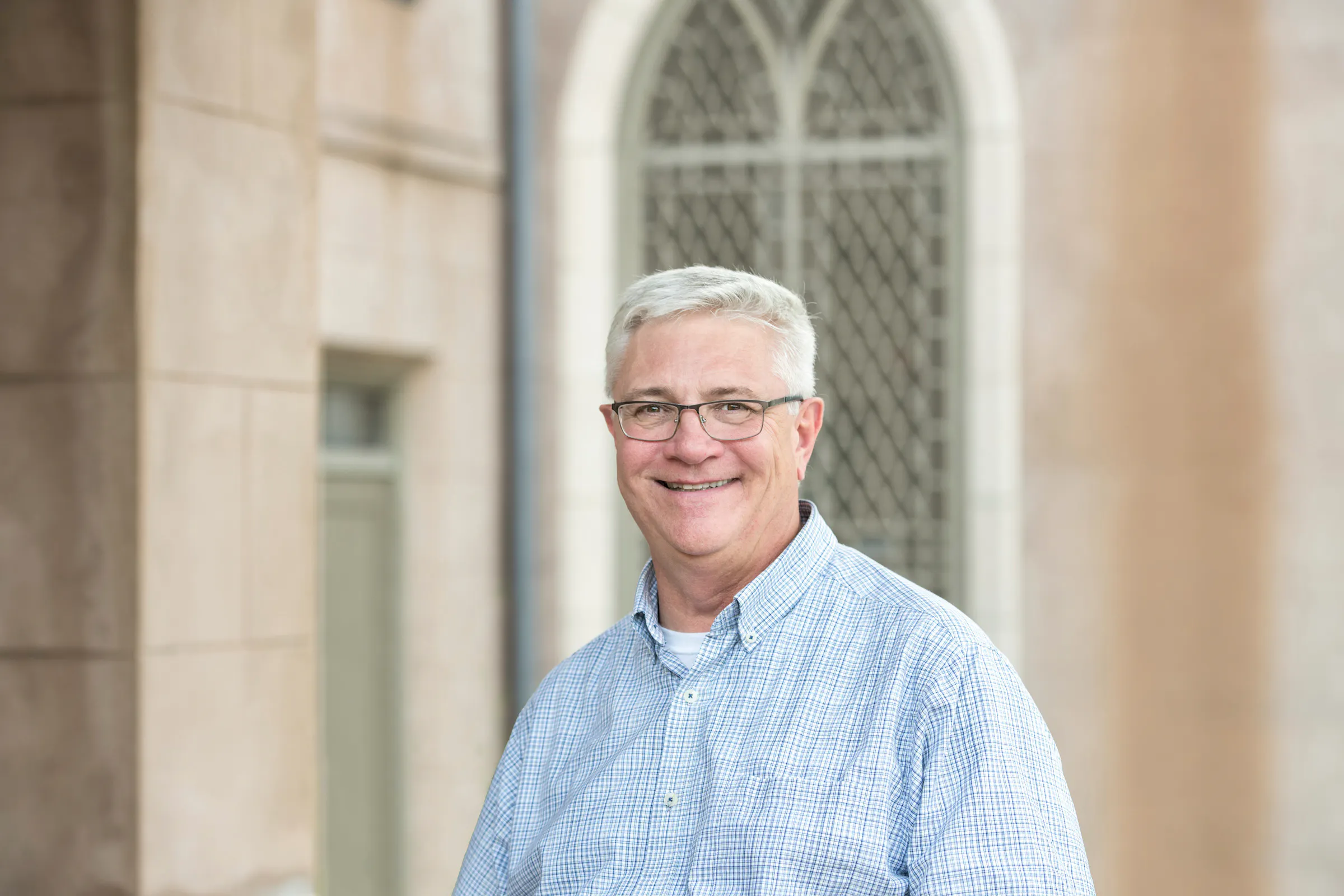
After nearly four decades at Hanbury, Principal Greg Rutledge is entering a new chapter that builds on a career defined by curiosity, craftsmanship, and a deep respect for the stories embedded in historic places.
Since joining the firm in 1988, Greg has helped shape Hanbury’s historic preservation practice through work that spans cultural institutions, civic landmarks, and community spaces.
Known for his deep technical knowledge of historic materials and construction techniques, Greg has built a reputation for approaching preservation not simply as restoration, but as storytelling, carefully uncovering the authentic narratives of the people who built, inhabited, and enjoyed these places over time.
As Greg prepares to retire from his full-time role, he reflects on the projects, philosophies, and passions that have defined his career, and we celebrate the impact he’s had on all of us.
What first inspired your path into architecture?
I’ve wanted to be an architect for as long as I can remember. It’s really the only thing I ever thought about doing. Through a high school program in my home town of Knoxville, Tennessee, I learned the art of hand drafting and realized this was something I truly loved. I went on to study architecture at the University of Tennessee in Knoxville, and from there the path felt clear.
What drew you to Hanbury?
Thanks to founder John Paul Hanbury’s own expertise and passion, the firm was known for its preservation work, which immediately caught my attention. That early leadership created a culture where historic preservation was valued as a serious discipline. What kept me here for nearly four decades is the freedom the firm gave me to carve my own path and develop a very specialized practice around historic materials, preservation techniques, and adaptive reuse. That kind of support is rare, and it’s one of the reasons I’ve never wanted to work anywhere else.
What makes Hanbury a special place to practice architecture?
It’s the culture. People are encouraged to pursue the work they care about, because this care has broad-reaching ripple effects on our clients and communities. For me, that has meant projects that bring life back to buildings that might otherwise be forgotten. When you restore and reuse a historic building, you’re not just repairing it, you’re preserving a piece of a community’s heritage. Often those projects also help strengthen the local economy and provide spaces that bring people together. Seeing a building come back to life and have this kind of purpose for the future is incredibly rewarding.

How do you describe your approach to historic preservation and design?
Every historic building carries an abundance of stories. My job is to get to the essence of that, and help the building tell those stories, subtly. It shouldn’t slap you in the face but rather should unfold gradually as you move through the space, immersing you in the story of what this space has been through.
I’m also very technical about materials and how they’re expressed. Historic buildings shouldn’t look brand new. They’ve lived a life that deserves to be visible. Imperfections and wear are part of their authenticity.

Can you share a project that reflects that philosophy?
We recently restored a 19th century one-room African American schoolhouse in a historic park. The goal was not just to preserve it but to honor its origins and represent the way it would have looked and felt when the school closed 75 years ago.
Originally the small building was heated by a wood stove, with no electricity or plumbing. To meet today’s standards we needed modern systems, but we integrated them so carefully that visitors never see them. HVAC equipment is hidden in the attic, and air moves subtly behind the cornice at the ceiling line.
About sixty percent of the original wood flooring was intact, so we blended new boards with the old to recreate the look of a well-worn classroom floor. The result lets visitors step inside and immediately understand the building’s past, while modernizing the structure and systems so its history can endure.

What projects are you most proud of?
I’ve had the privilege of working on so many projects from the Virginia State Capitol, designed by Thomas Jefferson, to the mid-century Norfolk Botanical Garden. But one that stands out is the restoration of a tobacco warehouse in South Boston, Virginia, where the tobacco and textile industries had largely disappeared and the building was sitting idle.
We converted it into The Prizery community arts center with a theater, dance studio, and gallery serving several local organizations. The city later tracked economic data and saw measurable increases in tourism, downtown activity, and tax revenue, proving the impact that these projects can have.
On a personal level, there’s nothing quite like sitting in a theater you helped design and watching musicians perform on that stage. I’ve seen artists I admire there, and it’s incredibly satisfying to know the space is still such an important part of the community, more than 20 years after our work.

What draws you to the technical side of this work?
Historic materials behave very differently from modern ones, and understanding those differences is essential. For example, many older buildings like the ones we’ve encountered in our work at Fort Monroe use softer bricks and lime-based mortar. If you repair those walls with modern cement mortar (which is much harder) the bricks will fail before the mortar does. So you have to replicate the original materials to keep the building performing the way it was designed. That investigative process of studying how a building was constructed and figuring out how to repair it without harming the original fabric is something I’ve always found fascinating.

Is there a project that particularly challenged you?
The restoration of the iconic Cavalier Hotel in Virginia Beach was probably the most intense project of my career. We spent about five years on it. The building used a now-obsolete 1920s construction system where steel was encased in masonry. Over time, moisture from the ocean environment caused the steel to rust and expand, which was cracking parts of the structure. We had to track down where water was entering, repair the steel structure, ensure stability, and preserve the historic exterior without altering its appearance, all while integrating modern systems and meeting strict preservation requirements. It was incredibly complex, but also one of the most rewarding projects I’ve worked on.


How would your colleagues describe you?
Someone once joked that I have “drawers full of useless knowledge.” I take that as a compliment. I’ve always enjoyed sharing what I’ve learned with younger architects. Historic preservation involves its own language, materials, techniques, architectural vocabulary, and it takes time to understand how those pieces fit together. If someone on the team asks how a material behaves or why something was built a certain way, I’m happy to dive into it. I learn from these investigations too, and like to think that curiosity spreads. Sometimes people say they have to go to the library after one of our conversations, which tells me they’re digging deeper into the craft, and that’s exactly what we want.
"I like to think that curiosity spreads. Sometimes people say they have to go to the library after one of our conversations, which tells me they’re digging deeper into the craft, and that’s exactly what we want."

What are you looking forward to in the next phase of life?
I don’t plan to disappear. There are still projects and organizations I care deeply about. One project I hope to stay involved with is a historic timber-frame structure connected to the Dismal Swamp Canal that likely dates back to the late 1700s. It’s slated to become part of a historic village in Chesapeake, at which point I would love to participate in its preservation.
I’ll also continue serving on preservation boards and committees, including the Norfolk Architectural Review Board and the AIA Historic Resources Committee.
What do you hope for the future of historic preservation at Hanbury?
My own practice became very specialized over the years, especially around historic materials and construction techniques. That kind of expertise takes time to develop. What encourages me is that there are several people at the firm who are interested in this work, and they’re equipped with tools and technologies that empower them to look and listen to buildings’ stories with increasing speed and precision. This practice will evolve as they shape it around their own passions, and that’s exactly how it should happen.
Looking back, what has made this work meaningful for you?
At the end of the day, it’s about much more than architecture. Historic preservation is about protecting the stories embedded in places: the people who built them, the people who used them, and the cultural history they represent. When we restore a building, we’re not just saving structures and facades. We’re uncovering those authentic stories and allowing them to continue being told—hopefully for many more decades to come.