Designing Welcome
Hospitality is one of the most expansive words in our field. It describes a sector, a service model, a mood, a brand position. Applied so broadly, it can lose precision. The idea at its center, though, is clear. Hospitality is the design of welcome.
That welcome is never one-size-fits-all. It may be quiet and restorative, shaped by privacy and retreat. It may be social and immersive, tied to the energy of local culture. Sometimes it feels like home. Sometimes it offers a deliberate sense of escape. In every case, the question is the same: how does a place make people feel received?
We think of hospitality less as a typology than as a way of thinking, one that shapes how people arrive at a place and the lasting impression it leaves with them. The programs differ across hotels, campuses, and residential and social settings, but the ambition is consistent: to create places with atmosphere and a clear sense of their setting.
This work begins long before check-in with how a place receives people, in three registers at once: spatial, material, and emotional. The spatial register provides cues about how to enter and where to go without friction. Light, texture, and proportion set the atmosphere, while acoustics and views do quieter work. Together, these decisions establish the emotional tone of a place.
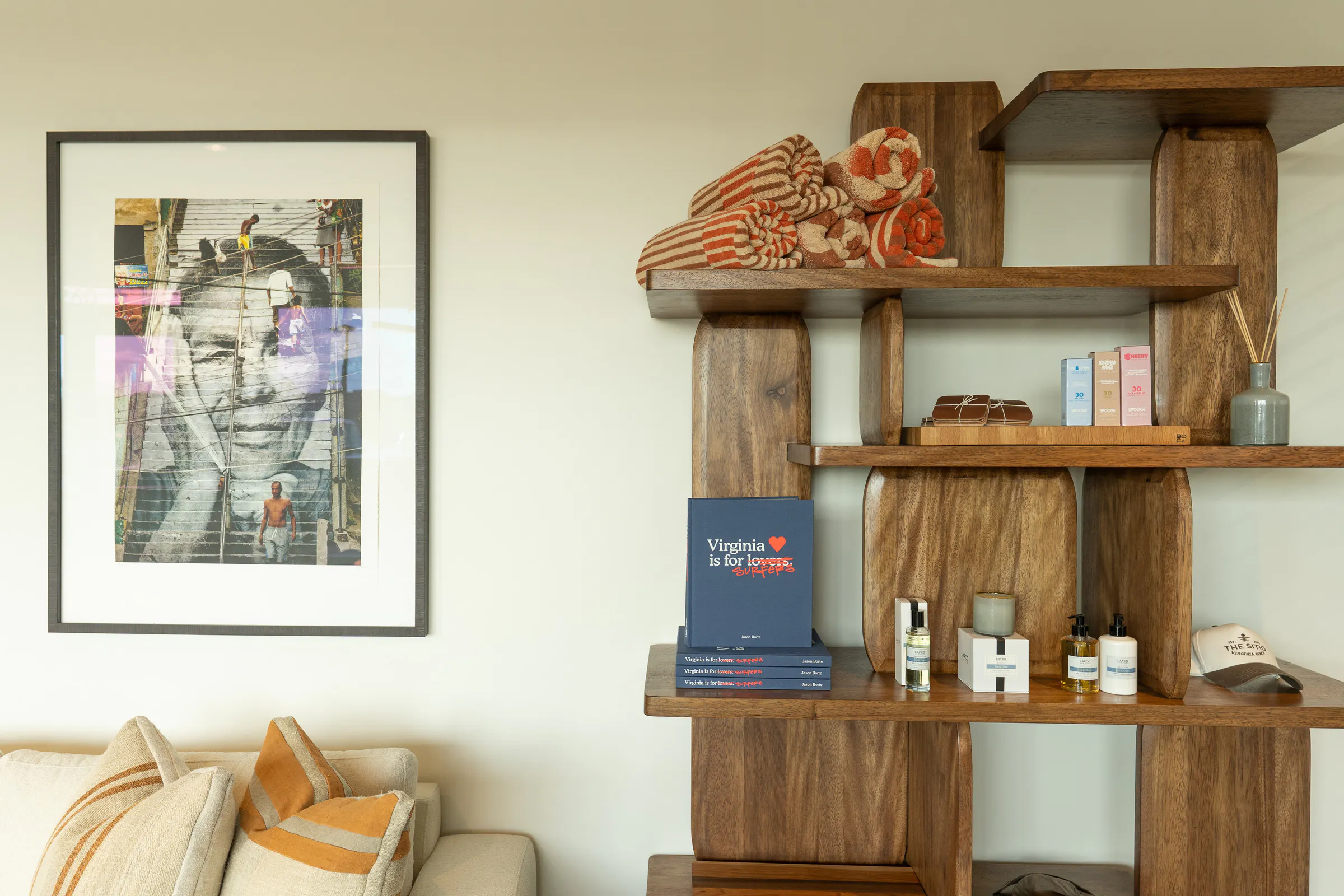
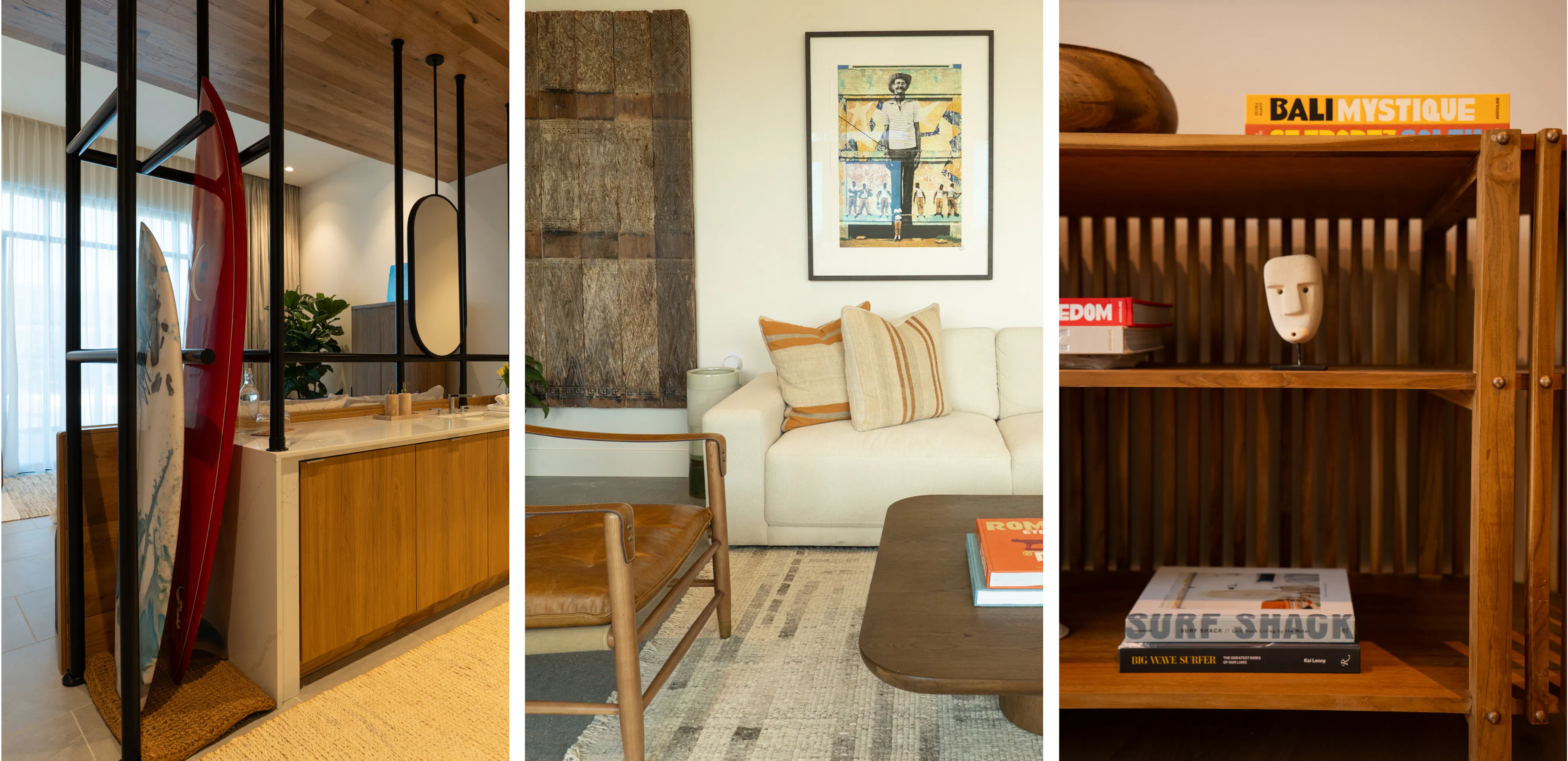
The Sitio offers one version of this approach. Conceived as a compact point of arrival within the new Atlantic Park district, anchored by North America's first Wavegarden Cove surf lagoon, the twenty-room boutique hotel uniquely translates the surf, art, and music culture of its setting into an intimate hospitality experience. Rather than relying on abundance, the project creates distinctiveness through curation and a close relationship to the life around it.

A front desk carved from a tree reclaimed during the district's construction. Playlists developed with Pharrell Williams' team, introducing guests to new artists during each stay. An art program that showcases work by local makers alongside internationally recognized names. Every choice inside a deliberately small hotel belongs to a specific coast, a specific town, a specific creative community.


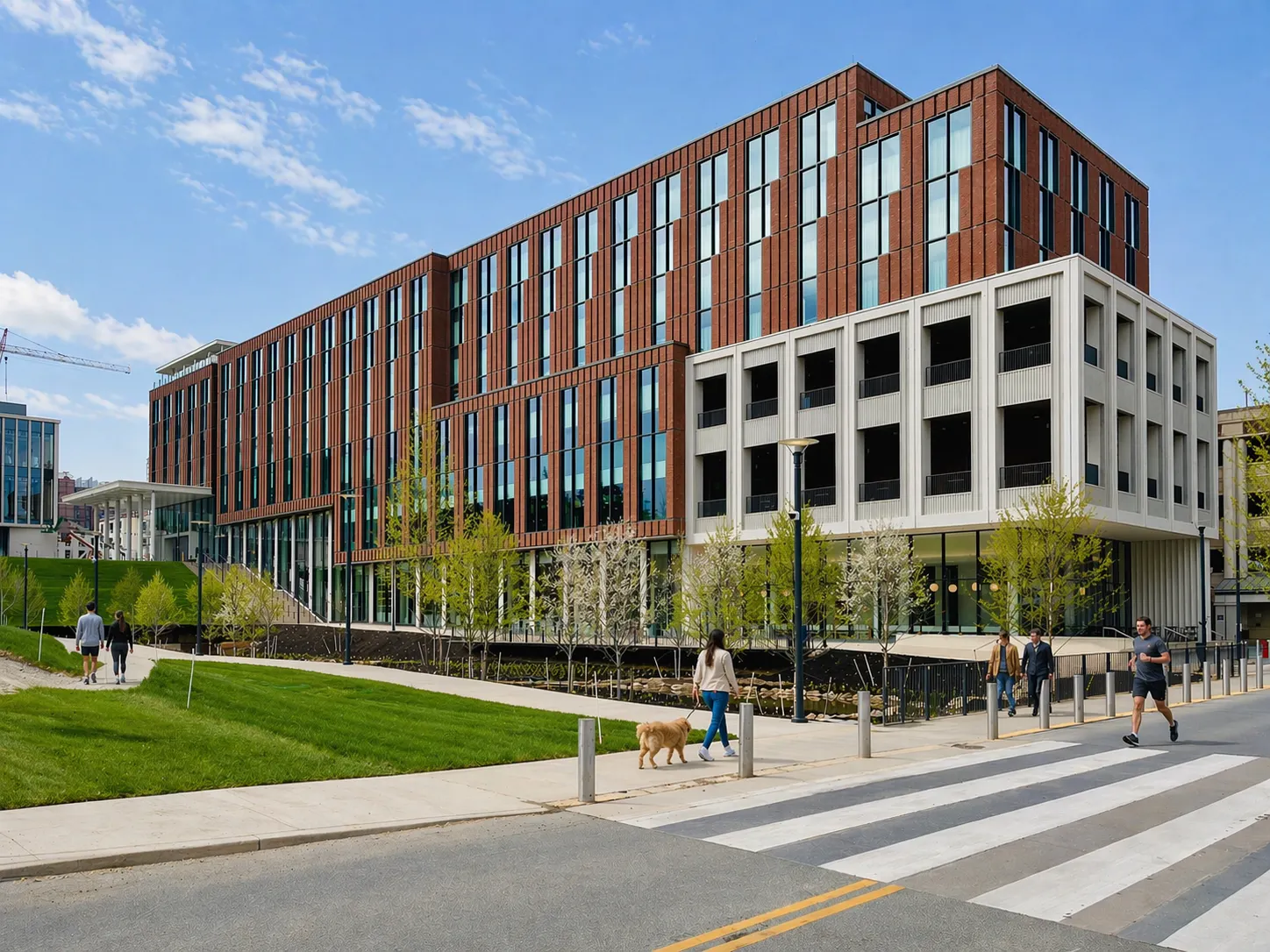
The Virginia Guesthouse at the University of Virginia offers another reading where hospitality is less about retreat from context than about connection within it. Sited at the hinge between Central and North Grounds, the 214-room hotel anchors the Emmet-Ivy Corridor and serves as both threshold and commons, pulling together a hotel, conference center, visitor hub, and social condenser in a single building.
It was designed to receive a broad range of visitors, from prospective students and alumni to faculty, conference guests, and the Charlottesville community, all entering through the same door. The Guesthouse forms the first touchpoint that is accessible and unmistakably On Grounds.
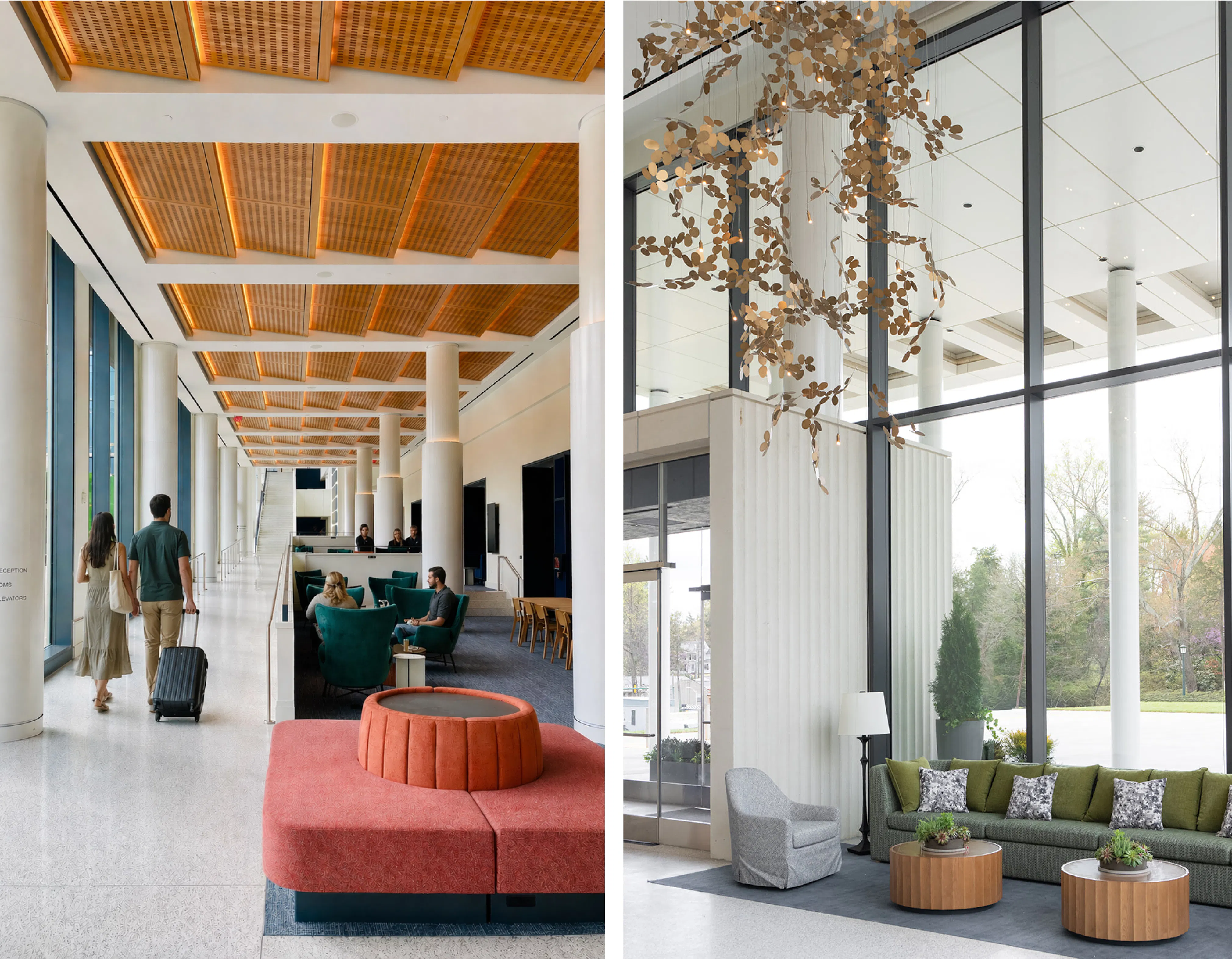
The hospitality thinking is legible in the naming. The central common space is called the Living Room rather than the lobby. The restaurant, Poplar, takes its name from a tree planted at Jefferson's Monticello. The chandelier at the center of the building is shaped after the Pratt Ginkgo, the most famous tree on UVA's Grounds. Three dining venues animate the building from morning to night, from a ground-floor café to a rooftop terrace with views of the University and the Blue Ridge beyond.
Once hospitality is understood this way, its different expressions become easier to read. Home, escape, wellness, and immersion in place are not separate themes competing for attention, but variations on the same underlying idea.
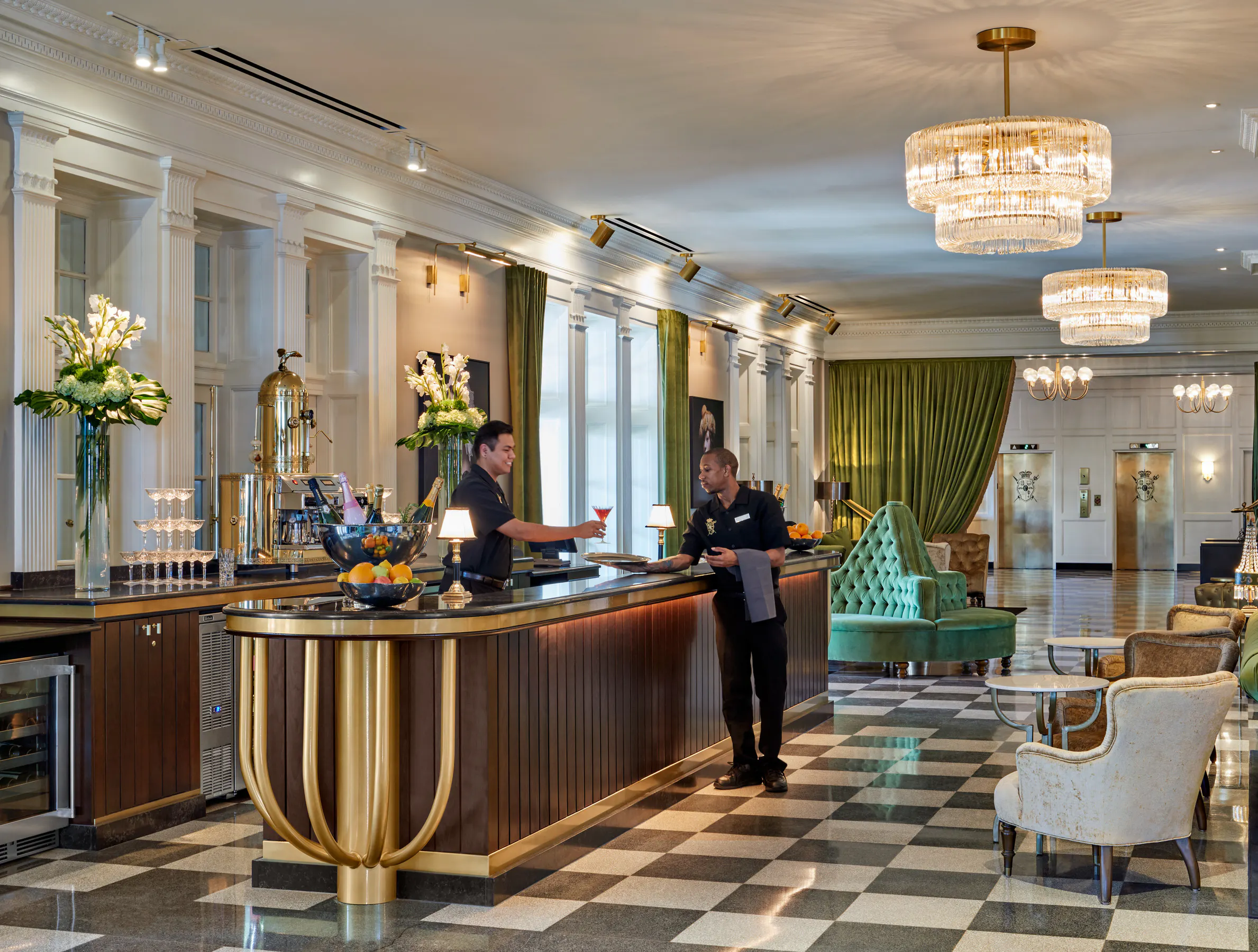
The Historic Cavalier Hotel demonstrates hospitality as escape, and a luxurious one at that. A 1927 Jeffersonian-inspired landmark and grande dame of the Virginia Beach oceanfront, the Cavalier returned to its original stature after a four-year restoration that rescued the building from demolition and restored its place as the most storied address on the coast. Its appeal lies partly in preservation, but more specifically in the opulence that preservation makes possible.
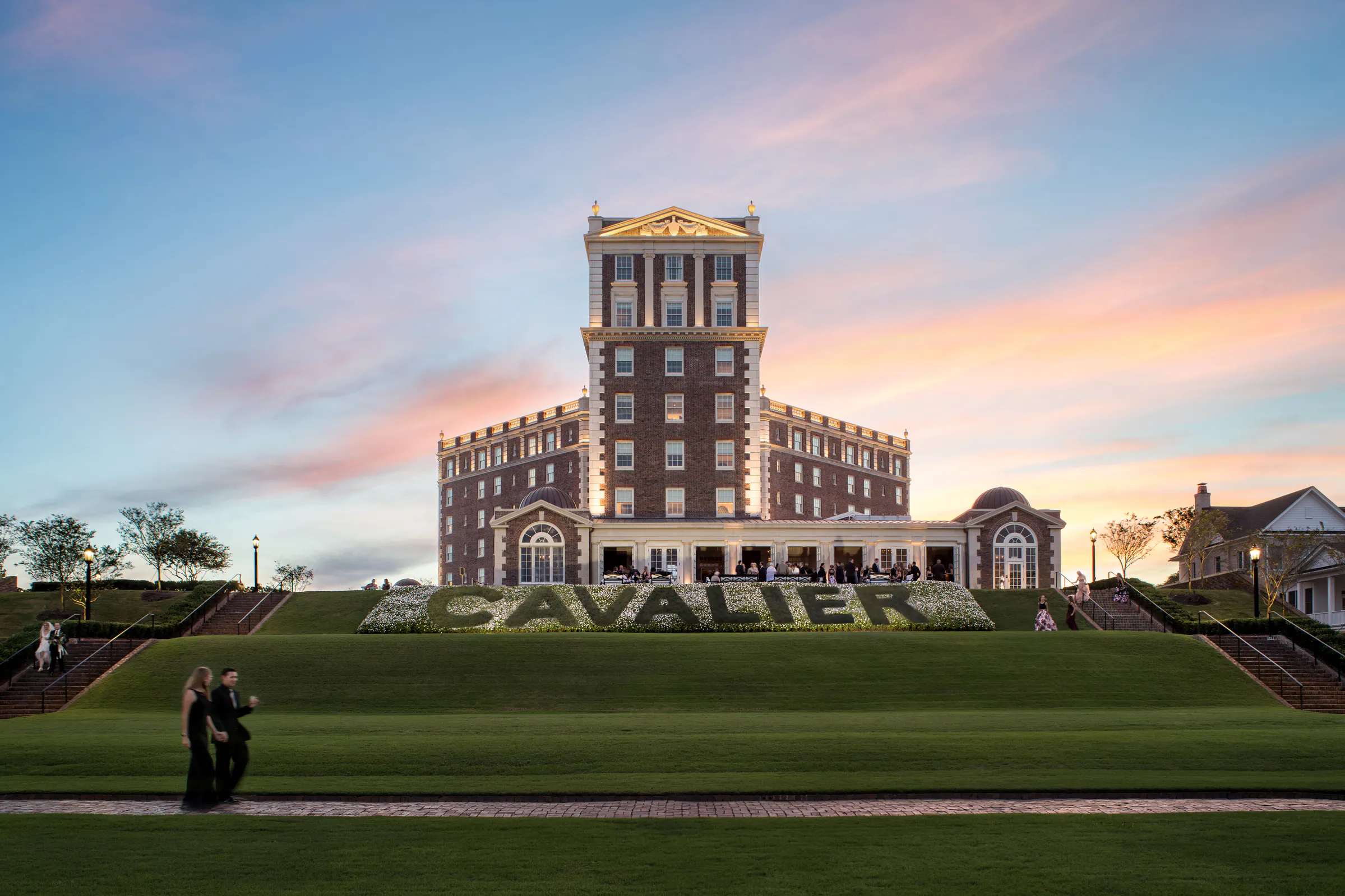
Original cementitious terrazzo floors with brass dividers were kept in place. First-floor windows were removed from their frames and repaired by hand. The Y-shaped plan still gives nearly every room a view of the Atlantic.
Inside, the interiors read as a living archive of the hotel's grandeur, with ornamental plasterwork, marble columns, and decorative cornice work restored with the care of a first-rate museum. The experience is an entry into a particular moment in time, a heightened sense of remove from the ordinary.
This view becomes especially useful beyond the hotel typology itself. Some of the most relevant lessons for hospitality design come from projects that are not hotels at all.
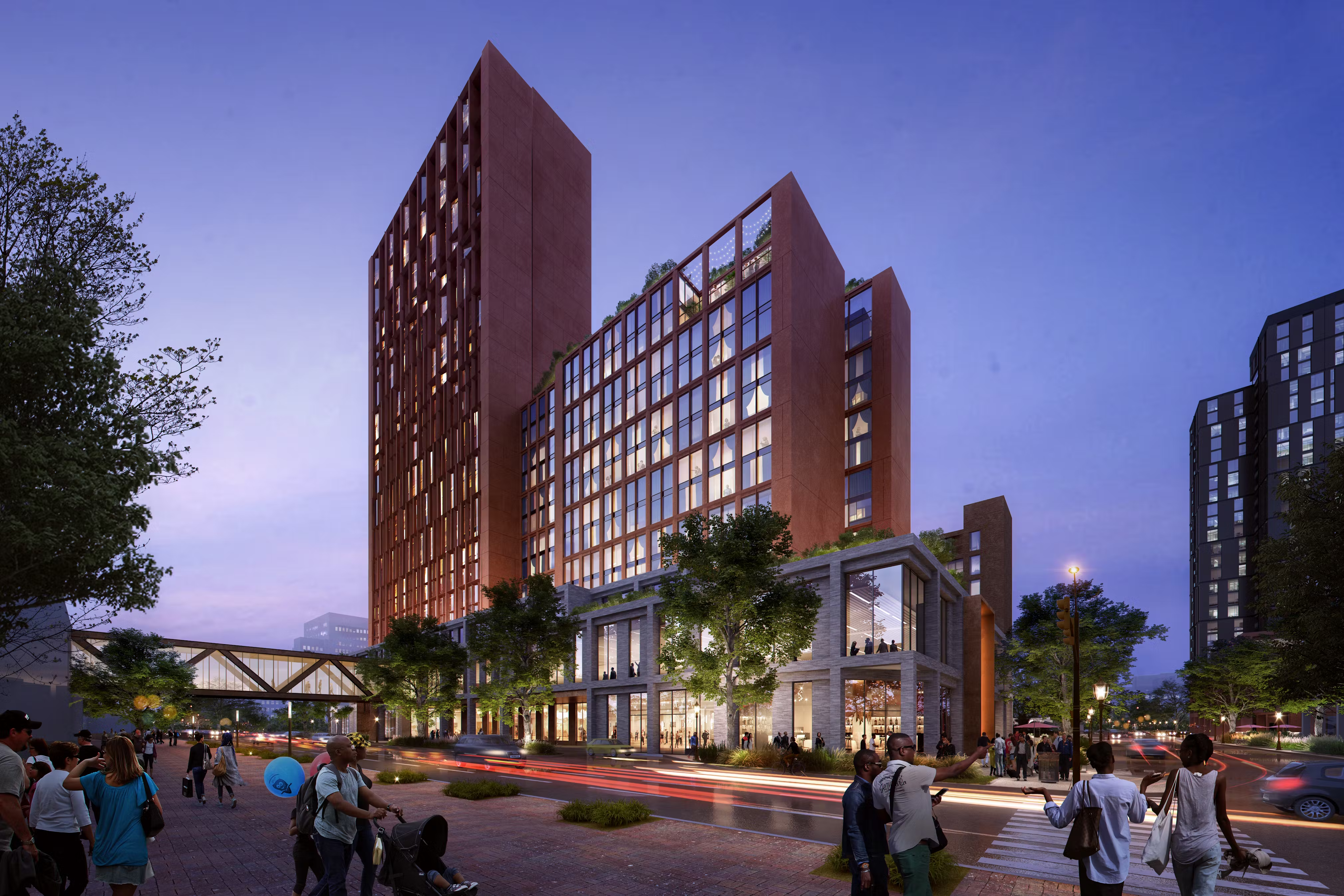
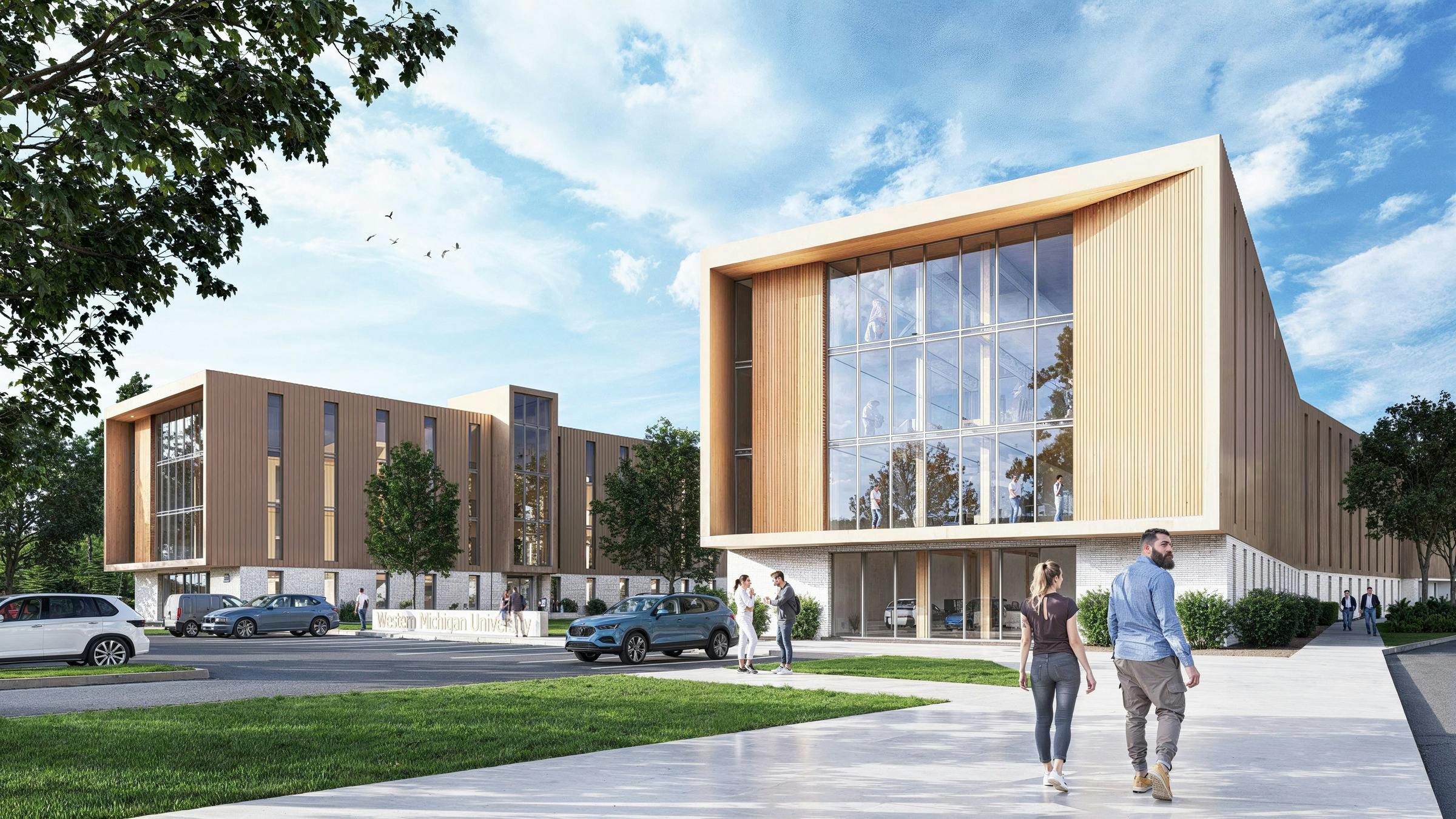
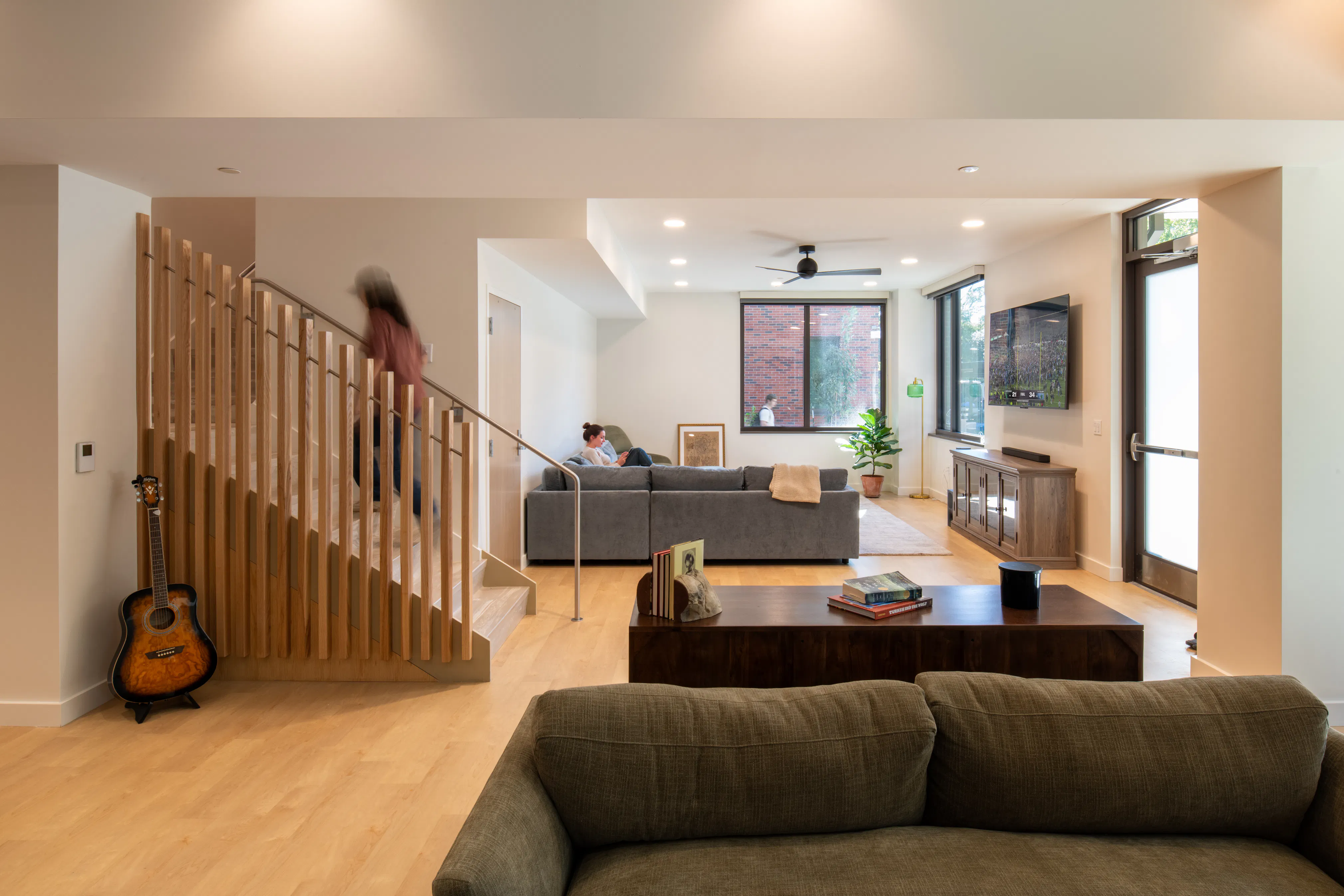
Tulane University's Fogelman Hall is one of them. A new residence hall at the center of Tulane's uptown campus, Fogelman is the first building completed in Phase II of the university's Residential Village.
The question on a project like this is not how to replicate a hotel, but how to shape a residential setting that feels welcoming and deeply connected to campus life. Residence halls are often discussed in terms of efficiency and student support, both of which matter. But they are also environments of long-duration welcome, places students return to every day, for years, at a scale hotels do not have to consider.

The hall is home to more than three hundred residents, with a Tulane professor in residence embedded in the community as a daily presence. The ground floor is a network of spaces for study, socializing, and recreation, designed to complement the larger community hub established in Phase I.
Double-height lounges give each building a gathering room students can treat as their own, flexible enough for focused study or informal gathering. Locally sourced St. Joe's Brick ties the hall into Tulane's architectural heritage so that arriving freshmen feel the continuity of the place they are joining.

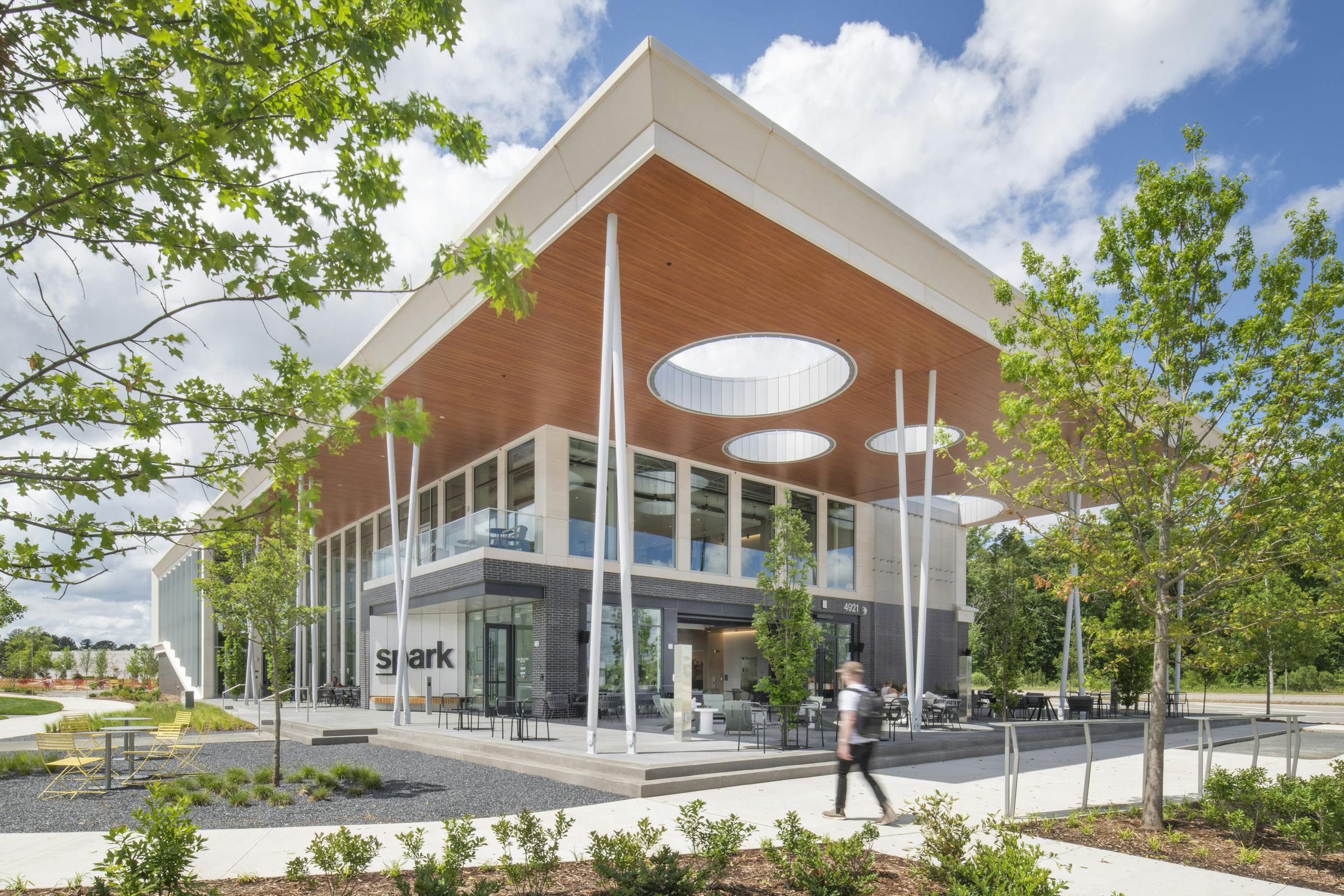
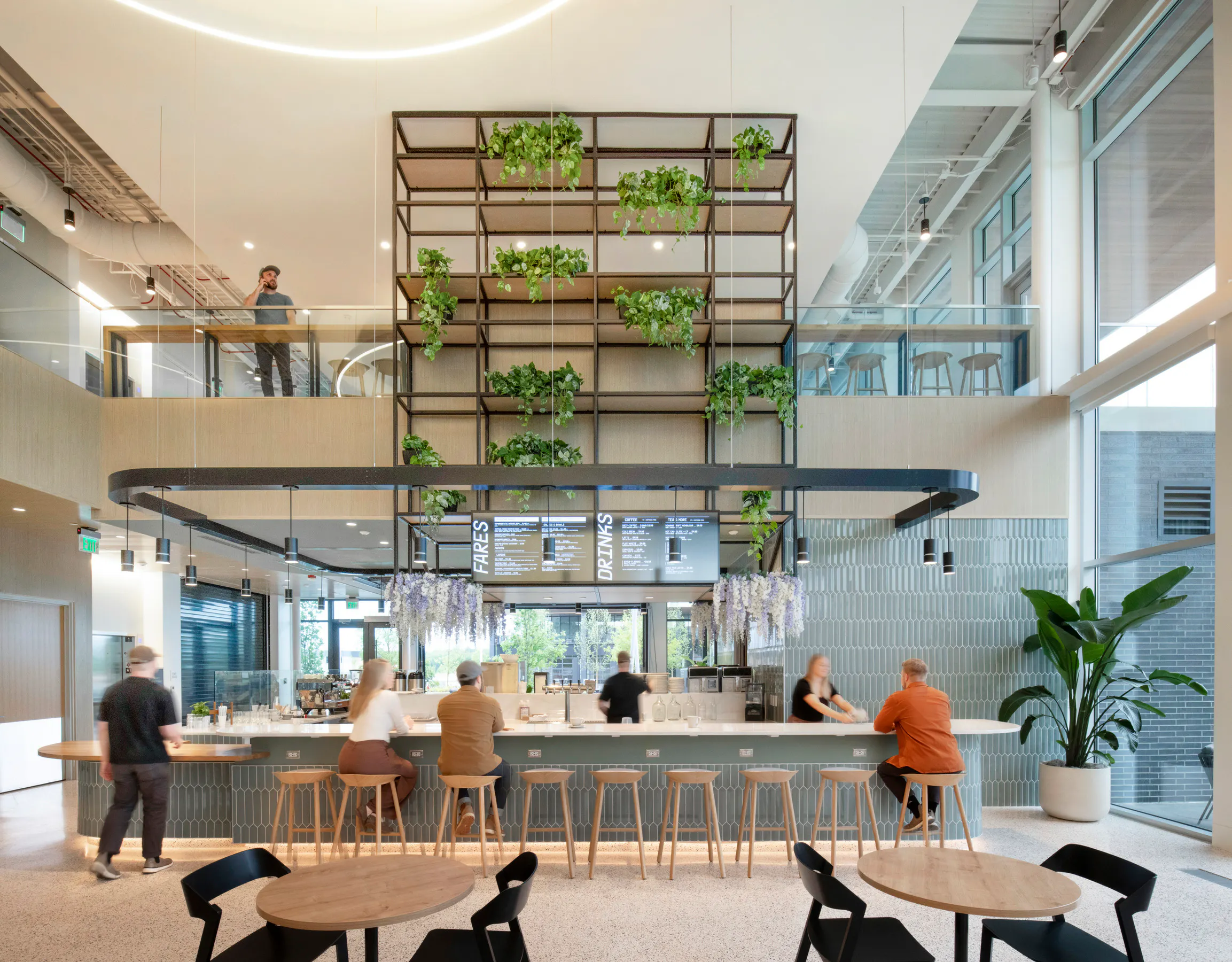
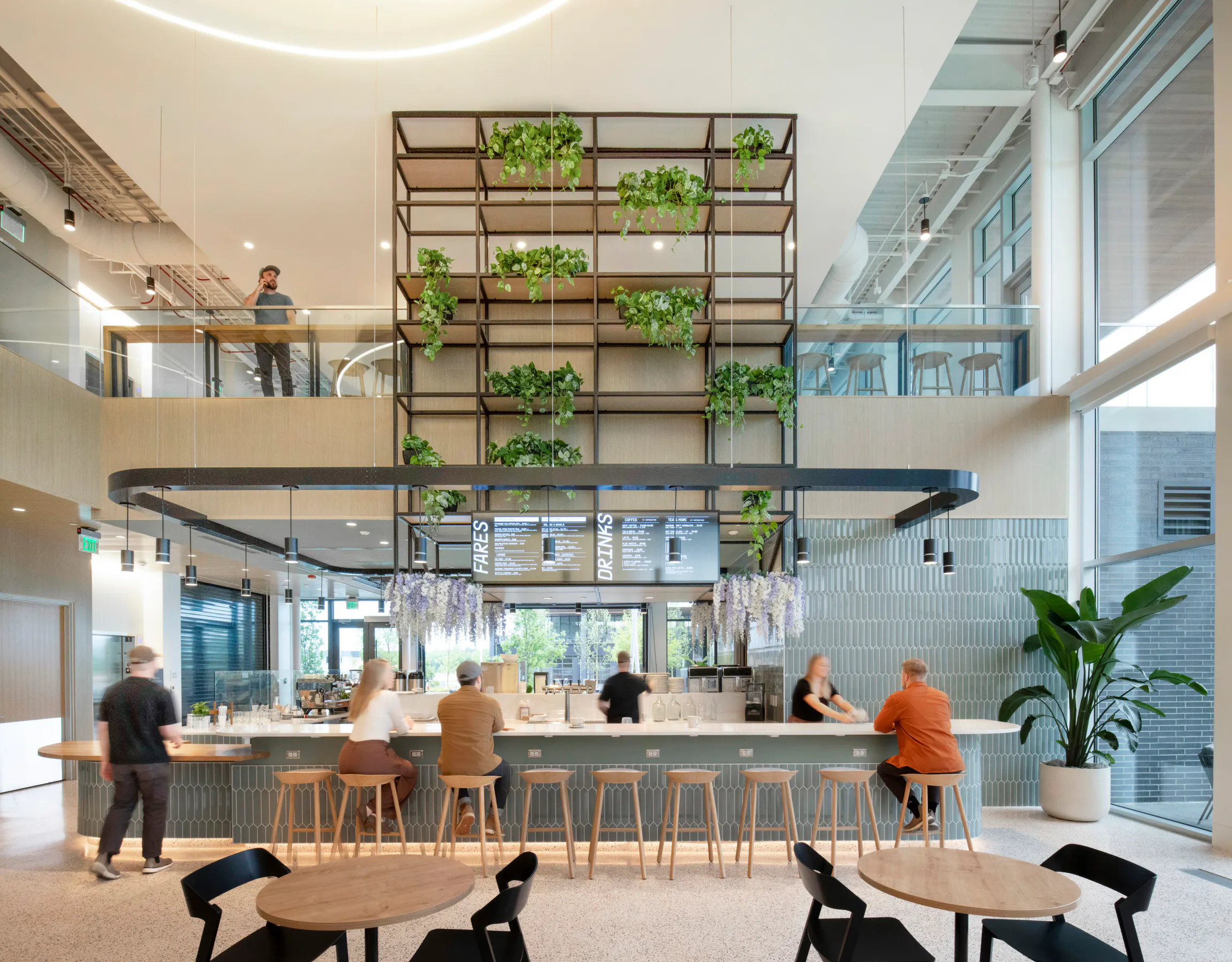
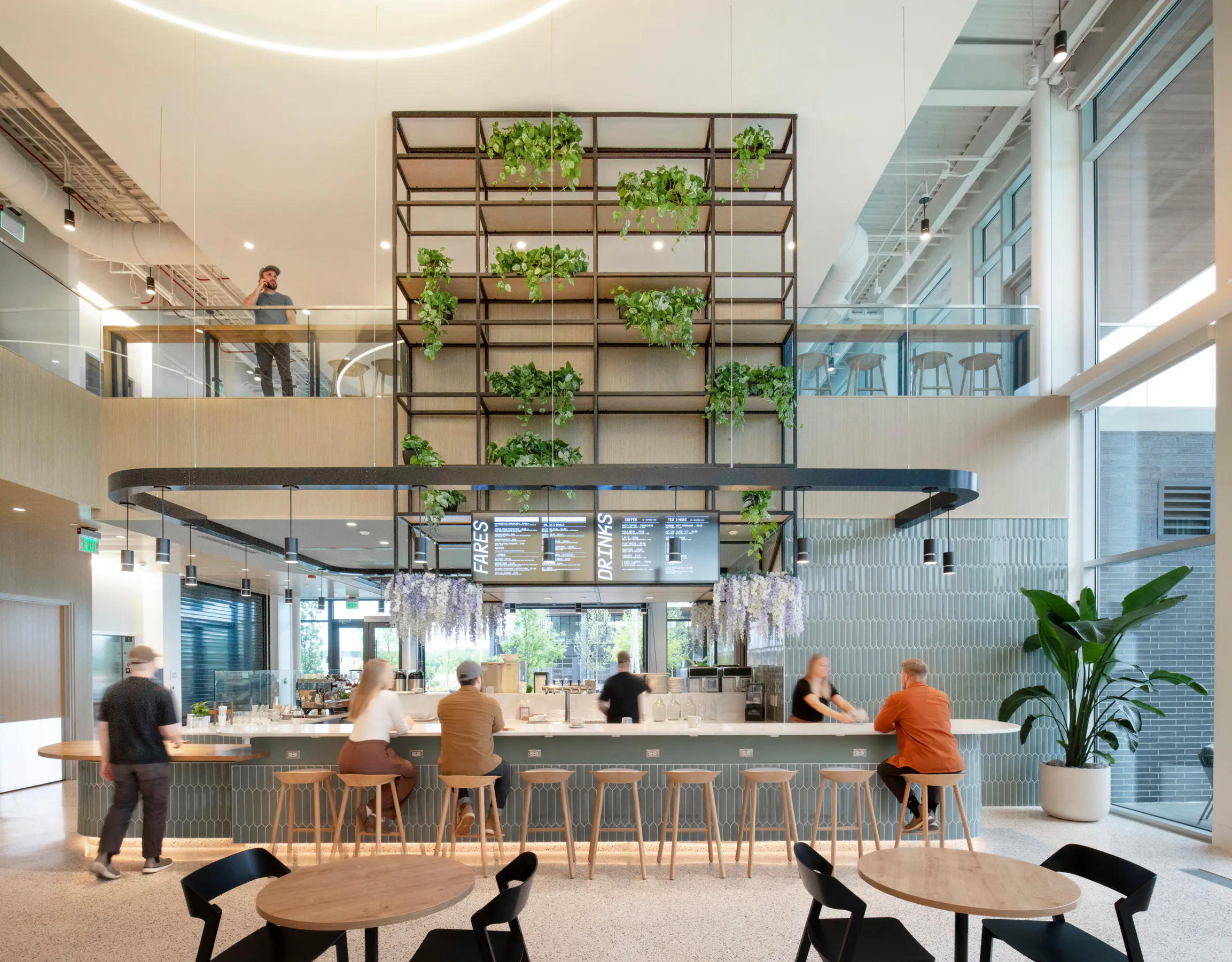
The sPARK Axis Amenities Center makes a related argument at a different scale. Sited at the edge of a 102-acre science and research campus in North Carolina, the building is designed as the campus living room, meant to receive staff, researchers, visitors, and neighbors from the surrounding community. The hospitality thinking is in how the building anticipates the way people actually dwell.
A sweeping roofline extends past the walls so welcome begins before the door. Inside, warm woods and stone register more as living room than as lobby. Seating is distributed so people can choose where to settle: a quiet nook for focused work, a lounge for conversation, a booth in the active corner of the building. Amenities from a café to a game area sit within easy reach, inviting people to linger. On a research campus, where buildings often prioritize throughput and productivity, this is a distinctive claim for wellbeing.
The value of this approach is that it resists narrow categorization. A hotel, a conference center, a residence hall, and an amenities center each ask different things of architecture, but all benefit from close attention to how welcome is constructed and how identity is translated into experience. What matters is whether lessons from one project type are allowed to sharpen another.
At the center of our practice is welcome, a precise architectural task. How does someone arrive? What tells them they belong here? What kind of atmosphere helps them settle, connect, or pause? These questions increasingly matter to clients who would not describe themselves as hospitality developers. Our work is to bring that discipline to many kinds of projects, designing welcome in forms that are specific and rooted in place.