Campus Planning in an Era of Uncertainty
by Keith Storms, President, Architect and Planner, and Scott Miller, Principal and Planner
Six questions every college and university should ask before planning its future
Colleges and universities are making decisions today that will shape campus life for decades. They are investing in facilities, infrastructure, and operations while the conditions those decisions depend on continue to shift.
The long-anticipated enrollment cliff has arrived. According to the Western Interstate Commission for Higher Education, the number of U.S. high school graduates peaked in 2025 and will fall each year through 2041. At the same time, student expectations are shifting, financial pressures are mounting, and technology is unsettling assumptions institutions have long planned against. Forty-two percent of bachelor's degree students now say AI has caused them to reconsider their major. Yet the decisions do not wait.
Campus planning can no longer be a periodic exercise or a document revisited every ten years. It must function as a framework for making better decisions over time, aligning mission, people, resources, and place so institutions can respond as circumstances change with clarity and purpose.
At Hanbury, that work begins with inquiry. The right questions reveal strategic aspirations and synergistic opportunities, building the shared understanding for a long-term durable plan. For institutions preparing to begin a planning initiative, these are six questions worth asking first
No plan can predict the future. The goal is not to create a perfect forecast, but to build readiness for multiple possible futures.
The starting point is an honest accounting of the forces shaping an institution's context: enrollment trends, demographic shifts, academic priorities, financial pressures, workforce needs, sustainability commitments, student wellbeing, technology, and community relationships. Some of these are measurable, others are still emerging. They all matter.
The assumptions underneath those expectations deserve the same scrutiny. Which enrollment trends are being taken for granted? How might evolving workforce needs reshape academic programs? What could artificial intelligence mean for teaching, learning, research, and administration? Which assumptions rest on data, and which are carried over from past experience?
The strongest plans distinguish what must remain constant, including mission, values, and commitments, from what may need to evolve as circumstances change.
Every college and university has its own story, culture, mission, and role in its community. These provide touchstones for the planning process.
Distinction may be rooted in research, academic innovation, or regional economic development. It may lie in access, affordability, experiential learning, sustainability, student support, or a deeply residential campus experience. Whatever the source, the physical campus should reinforce what the institution does best and where it intends to go next.
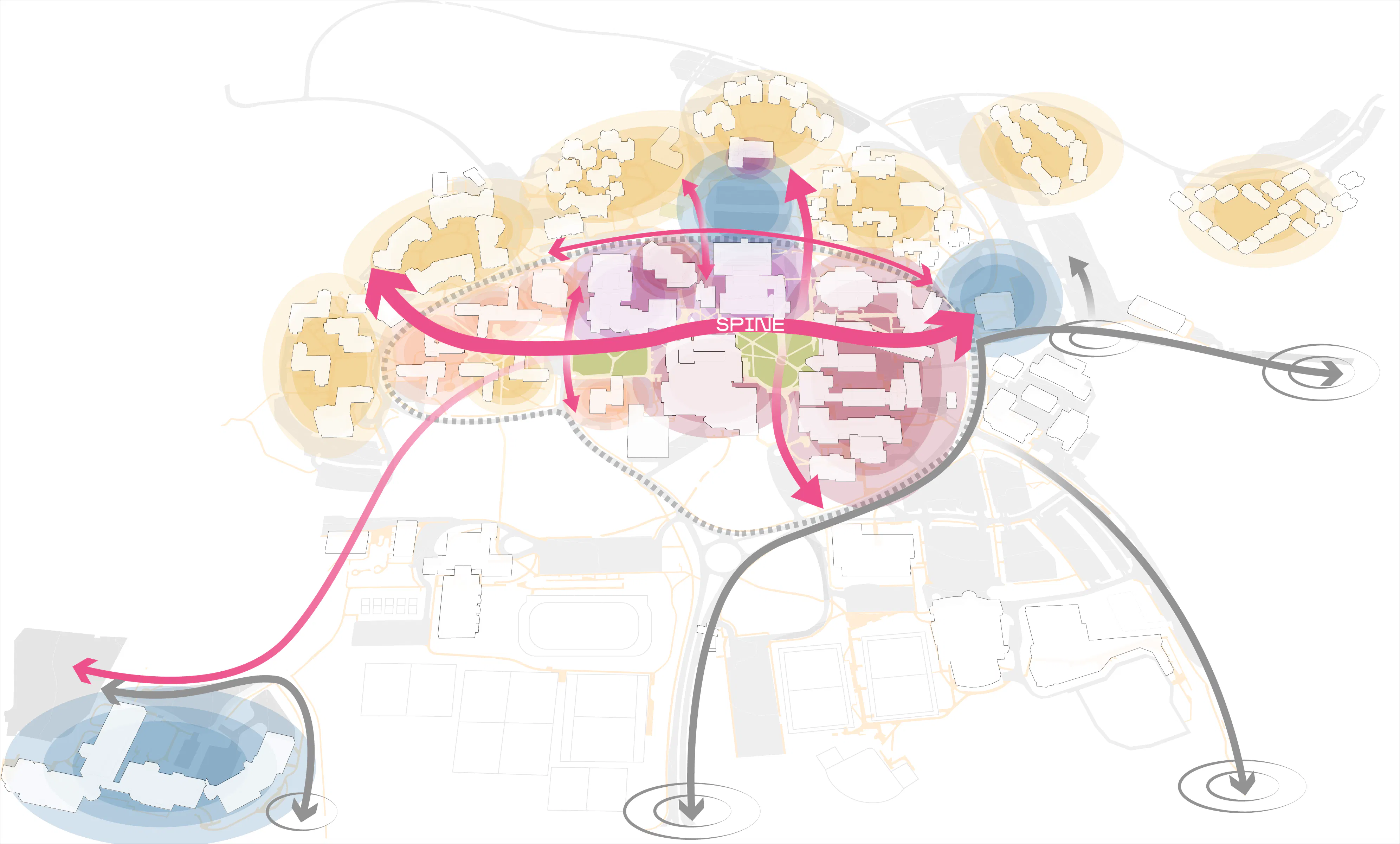
That principle was central to the work at Binghamton University, where the Facilities Master Plan Update translated the university's academic reputation and research ambitions into an implementable framework for future investment. Beyond accommodating growth, the plan integrates key initiatives into the physical campus to spur innovation and strengthen Binghamton's standing as a leader in research, technology, and engineering.
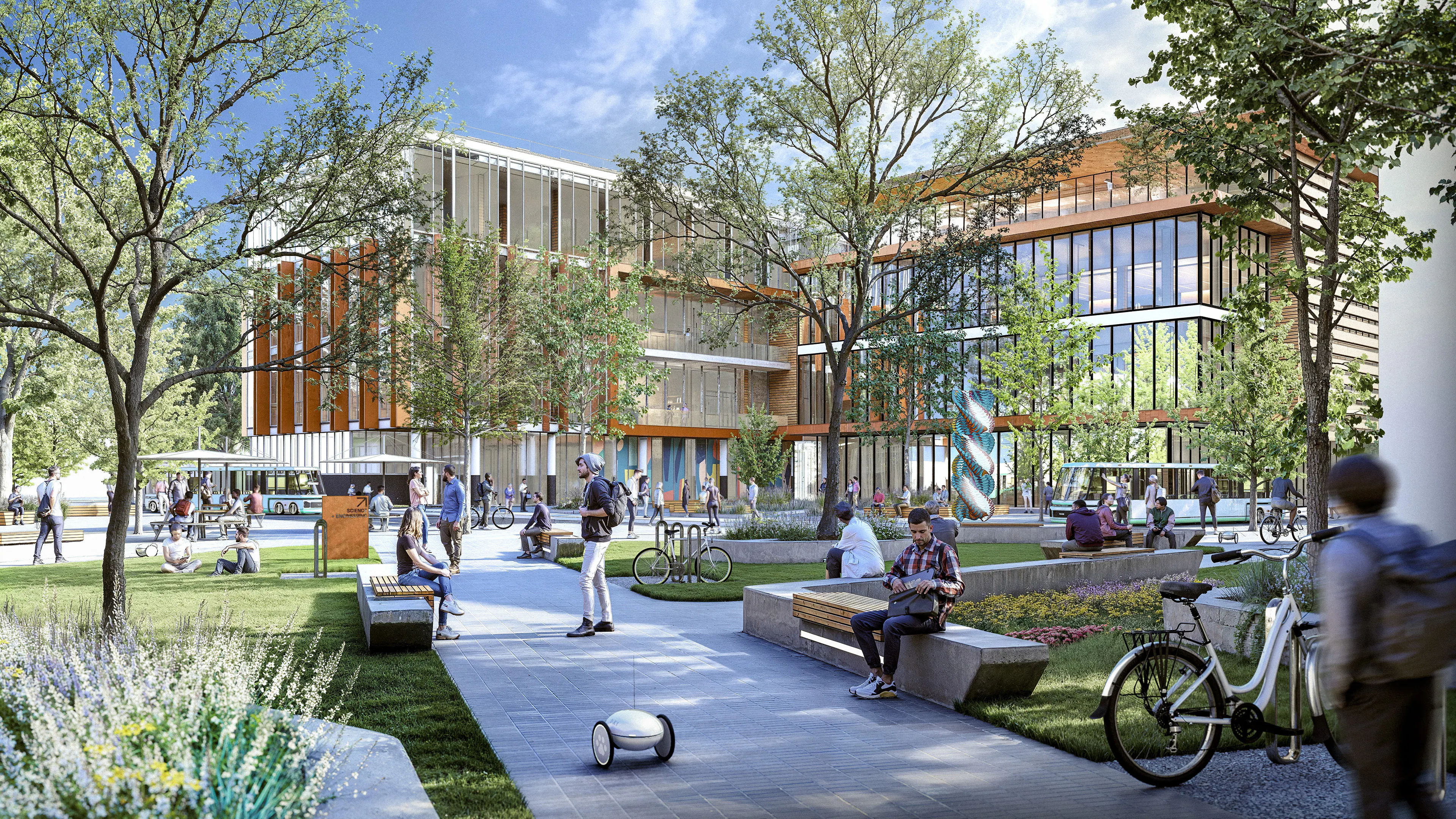
Integrated planning depends on meaningful engagement, and on a process that brings the right voices into the right conversations at the right time.
Presidents, provosts, CFOs, facilities leaders, student affairs teams, faculty, staff, students, trustees, and community partners each understand the institution from a different vantage point. Their perspectives surface operational realities, cultural dynamics, student needs, financial constraints, and implementation challenges that may not be visible from a single leadership view.
Good engagement builds trust, tests assumptions, and produces a plan people can understand, support, and execute.

A campus plan can easily become a collection of projects. Before identifying specific initiatives or investments, institutions need clarity about the issues and opportunities driving them, anchored to the strategic plan.
Is the institution trying to improve recruitment and retention? Address deferred maintenance? Strengthen academic collaboration? Modernize student housing? Reduce carbon emissions? Improve accessibility and mobility? Build stronger connections with the surrounding community? Use space more efficiently? Support new pedagogies or research models?
The most effective plans define priorities before solutions, and they separate symptoms from root causes. A perceived shortage of space may turn out to be a utilization challenge. Recruitment concerns may trace back to the student experience rather than housing capacity. Deferred maintenance may reflect larger questions about facility portfolio strategy and resource allocation.
Defining the challenge accurately is what allows an institution to focus investments where they will create the greatest long-term impact.
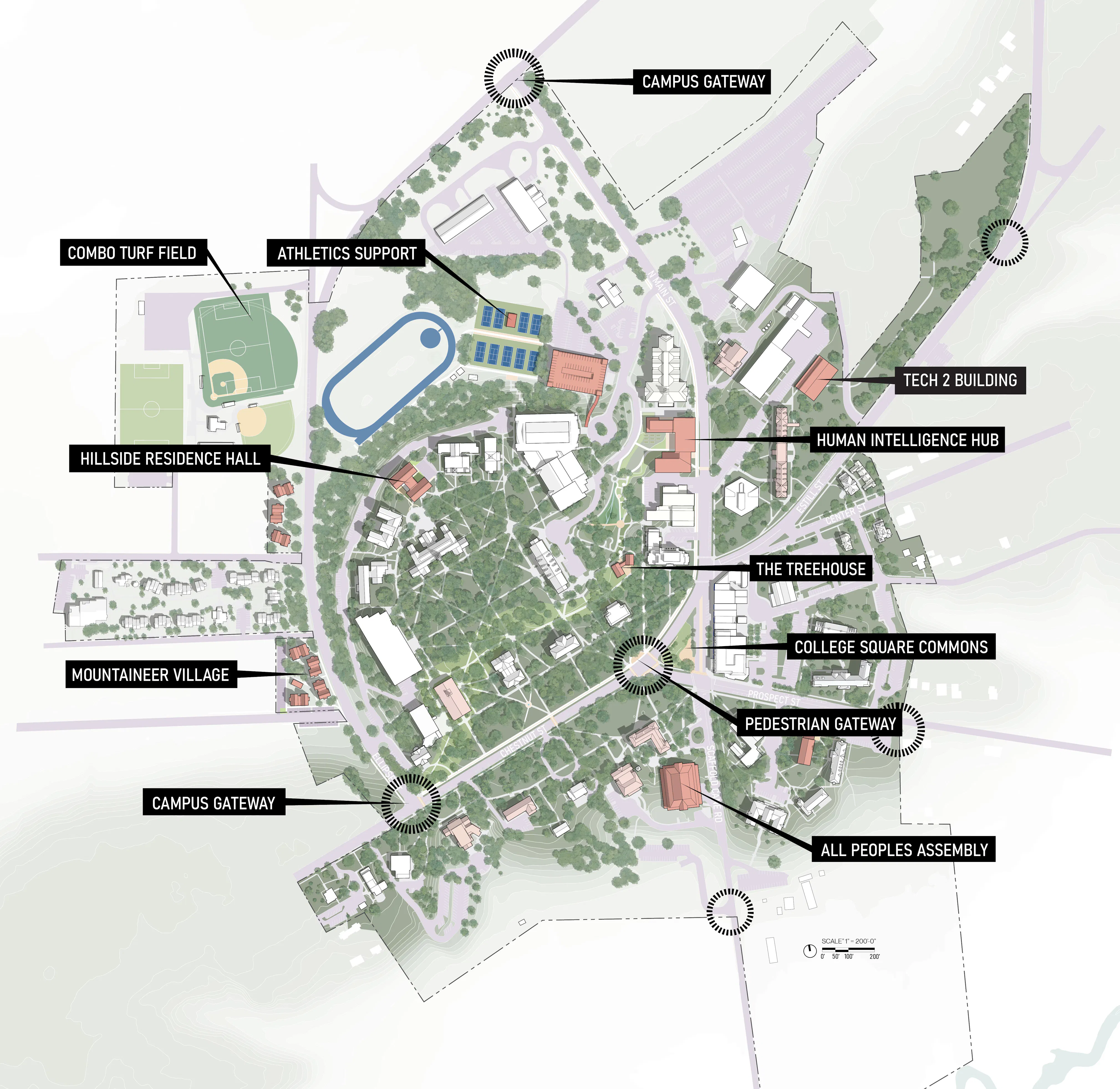
Integrated planning requires a clear view of resources: capital funding, but also operating budgets, staffing, space, technology, infrastructure, maintenance capacity, and institutional energy.
A plan that ignores implementation realities can generate excitement and then frustration. A plan built only around constraints can miss transformational opportunities. Getting the return an institution expects from its investments means understanding the campus as an ecosystem and looking for the moves that produce disproportionate benefit.
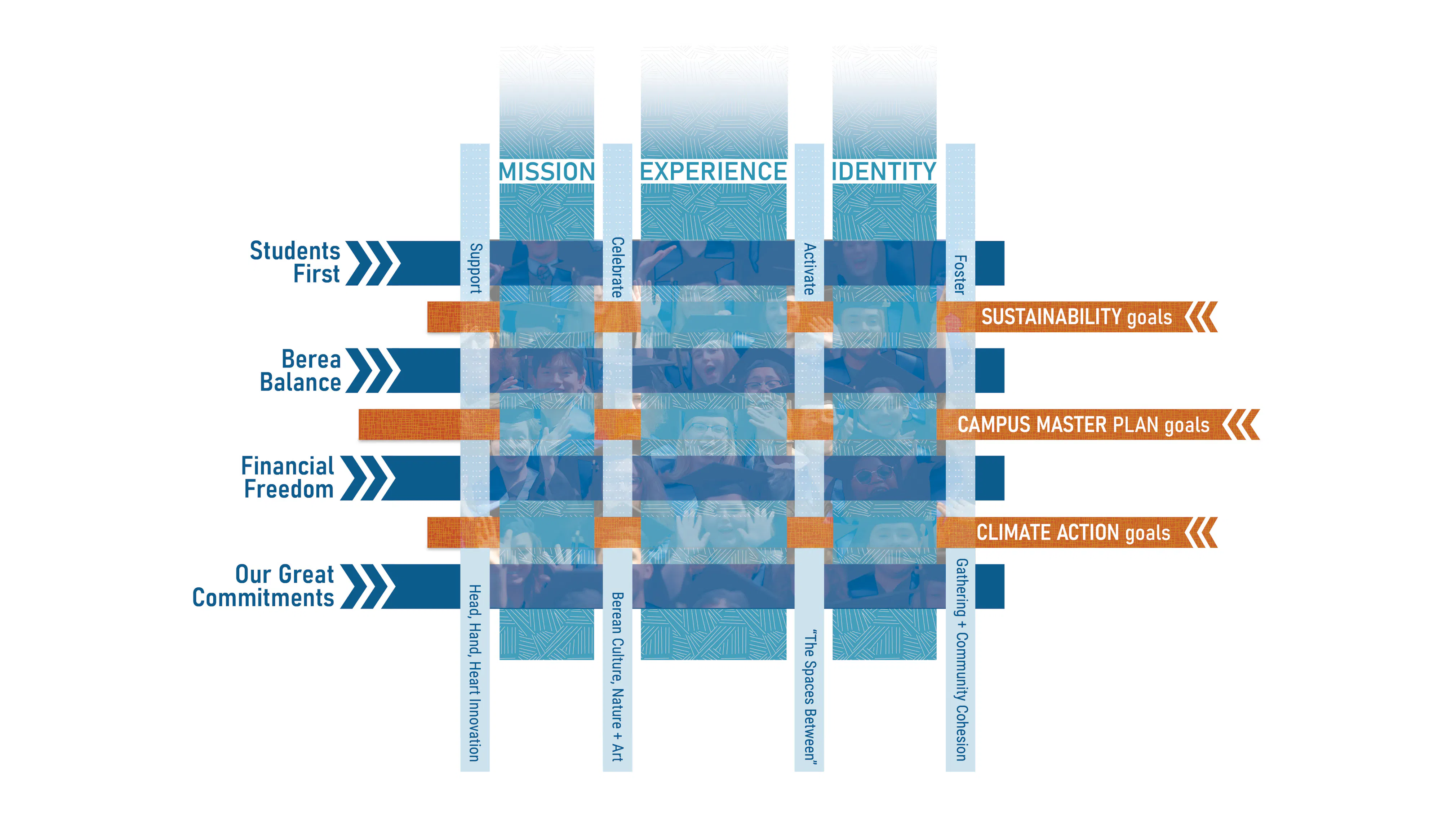
At Berea College, campus planning, sustainability planning, and climate action planning were treated as a single effort. That integration was essential. Rather than treating facilities, operations, stewardship, and student experience as separate conversations, the process created a shared framework that aligned compounding investment with mission and long-term institutional commitments.
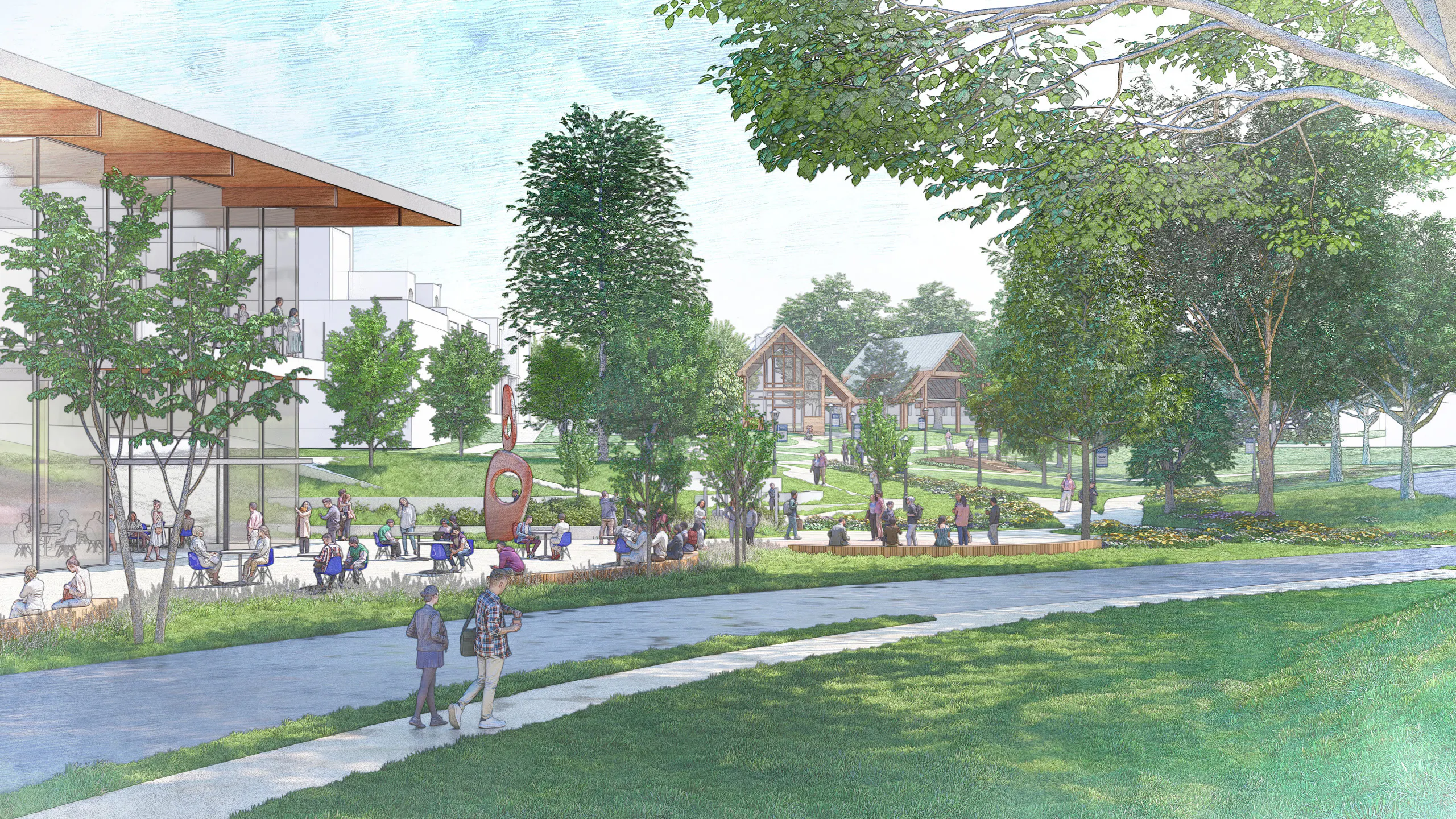
The most useful planning frameworks are flexible roadmaps. They establish priorities, principles, and decision-making criteria that guide implementation as circumstances change.
Adaptability requires accountability. Planning does not end when the document is complete. Institutions need ways to measure progress, revisit priorities, and adjust implementation over time. Metrics may include space utilization, energy performance, student success indicators, housing demand, mobility improvements, capital renewal, community engagement, or progress toward sustainability goals.
UNC Wilmington's planning work shows how near-term action and long-term vision can coexist. By linking data-informed needs with qualitative aspirations, the plan created a framework for prioritized investment that drew immediate support and funding, while leaving multiple routes open to the university's longer-term ambitions.
An integrated plan should become part of how an institution operates. Connected to budgeting, assessment, capital investment, and leadership conversations, it stays relevant long after publication.

The most effective campus plans go beyond buildings and land use to address institutional choices. They help leaders decide where to invest, what to prioritize, how to steward resources, and how to create environments that support the people and communities they serve.
For Hanbury, this work draws on decades of experience with colleges and universities and on our own continuous learning. Every campus has its own culture, pressures, and aspirations. Our charge is to lead the process of discovery and optimism for the future, build alignment, and prepare institutions to act with intention.
In an era of uncertainty, integrated planning offers something both practical and powerful: a way to move forward with clarity, flexibility, and purpose.